If you have ever heard someone say a person died intestate and felt confused you are not alone. Legal terms can sound complicated but understanding Intestate Meaning is actually very important especially when it comes to family property inheritance and estate planning. Knowing what this word means can help you protect your assets avoid disputes and understand your rights.
This guide explains Intestate Meaning in clear simple language with practical examples so you can fully understand how it works in real life.
What Does Intestate Meaning Mean? Definition and Origin
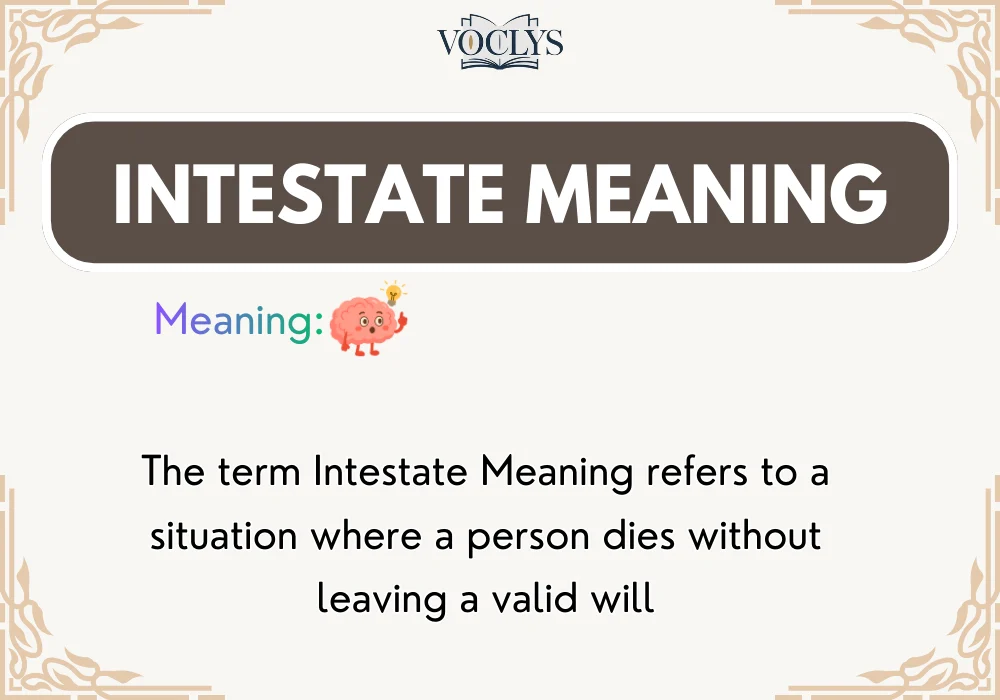
The term Intestate Meaning refers to a situation where a person dies without leaving a valid will.
In legal terms if someone passes away intestate it means:
- They did not create a will
- Or their will is legally invalid
- Or their will does not cover all of their assets
The word intestate comes from Latin which basically means without a testament. A testament is another word for a will.
So in simple language Intestate Meaning = dying without a legal will.
What Happens When Someone Dies Intestate?
When a person dies intestate the law decides who receives their property. This process is called intestate succession.
Instead of following personal wishes the court follows a fixed legal order. The exact rules depend on the country or state but generally the order looks like this:
- Spouse
- Children
- Parents
- Siblings
- Other close relatives
If no relatives are found the property may go to the government.
This is why understanding Intestate Meaning is important. Without a will you lose control over who receives your assets.
Real Life Example of Intestate Meaning
Let us imagine a simple scenario.
Ali owns a house savings and a car. He never made a will. After his death his family wants to know who inherits his property.
Because he died intestate the court applies intestate succession laws. If he had a spouse and children the estate would be divided according to legal rules not personal preference.
This can sometimes cause:
- Family disputes
- Delays in property distribution
- Emotional stress
- Financial complications
That is the real world impact of Intestate Meaning.
How Intestate Succession Works
When someone dies intestate the estate goes through a legal process.
Step 1: Appointment of an Administrator
The court appoints someone usually a close family member to manage the estate. This person is called an administrator.
Step 2: Paying Debts and Taxes
Before distributing property the administrator must:
- Pay outstanding debts
- Clear loans
- Pay taxes
- Cover funeral expenses
Step 3: Distributing Remaining Assets
After debts are cleared the remaining assets are divided according to the law.
Who Inherits Under Intestate Law?
While rules vary slightly in different countries most systems follow a similar structure.
If the person had a spouse and children
The spouse and children usually share the estate.
If there are no children
The spouse may receive most or all of the property.
If there is no spouse
Children inherit everything.
If there are no spouse or children
Parents siblings or extended relatives inherit.
Understanding Intestate Meaning helps you see how automatic these rules are. The law decides not the individual.
Common Misunderstandings About Intestate Meaning
It only applies to rich people
False. Intestate law applies to anyone who owns property no matter how small.
Family will automatically agree
Not always. Disagreements are common when there is no clear will.
Verbal wishes are enough
No. Verbal promises usually have no legal value in intestate cases.
Everything goes to the spouse
Not always. In many places children have legal rights to a portion.
Why Creating a Will Matters
Now that you understand Intestate Meaning it becomes clear why a will is important.
A valid will allows you to:
- Choose who inherits your assets
- Name guardians for children
- Reduce family conflict
- Speed up the legal process
- Protect vulnerable family members
Without a will you leave those decisions to the legal system.
Intestate vs Testate Difference
Understanding the difference helps clarify the concept.
Intestate
Person dies without a valid will
Law decides asset distribution
Testate
Person dies with a valid will
Personal wishes decide asset distribution
The key difference is control. A will gives you control. Intestate situations remove it.
How to Avoid Dying Intestate
To avoid the consequences of Intestate Meaning you can:
- Create a legally valid will
- Update your will regularly
- Clearly list all assets
- Consult a legal professional
- Store your will safely
Even a simple properly drafted will can prevent major problems later.
Intestate Meaning in Everyday Language
In simple words intestate means dying without writing down who gets your property. When that happens the government steps in and follows fixed rules.
Think of it like this. If you do not leave instructions the system uses default settings.
That is the easiest way to remember Intestate Meaning.
When Does Intestate Meaning Become Complicated?
Situations can become more complex when:
- There are second marriages
- There are children from different relationships
- There is no close family
- Property is owned in different countries
- There are business assets involved
In such cases intestate laws can create unexpected results.
FAQs:
What does intestate mean?
Intestate means a person died without leaving a valid legal will
Who inherits if someone dies intestate?
Close family members such as spouse children parents or siblings inherit according to the law
Does intestate mean no one gets the property?
No. The property is still distributed but according to legal rules not personal wishes
Can family members change intestate distribution?
Usually no unless all parties legally agree and the court approves
Is dying intestate common?
Yes many people die without making a will which leads to intestate proceedings
Conclusion
Understanding Intestate Meaning is essential because it affects what happens to your property after death. If someone dies intestate the law decides who inherits based on a fixed order of relatives. While this system ensures assets are distributed it does not consider personal preferences or unique family situations.
Creating a valid will gives you control clarity and peace of mind. It reduces stress for loved ones and prevents unnecessary disputes. Taking simple legal steps today can protect your family tomorrow.
Have you ever thought about making a will Share your thoughts or experiences in the comments and join the conversation.

Hi, I’m Alex, a content writer and language enthusiast here at Voclys. I love exploring words, meanings, and the way language shapes how we think and communicate. That passion is what inspired me to start sharing clear and simple word explanations with learners around the world.
Through Voclys, my goal is to make vocabulary learning easier, more enjoyable, and stress-free. I focus on breaking down word meanings in a way that anyone can understand — whether you’re a student, English learner, or just curious about language.
I truly believe that strong vocabulary leads to confident expression, and I’m excited to help you grow step-by-step on your learning journey.
Thanks for visiting Voclys — and I hope the words you learn here make a real difference in your daily life.
— Alex