Sometimes in conversations online or in texts you’ll see someone say they are strung out and wonder what that really means. Understanding Strung Out Meaning helps you decode messages correctly and respond naturally. This guide breaks it all down in simple friendly language so you can recognize the term, understand its tone, and see how it’s used in different contexts.
What Does Strung Out Mean (Definition and Origin)
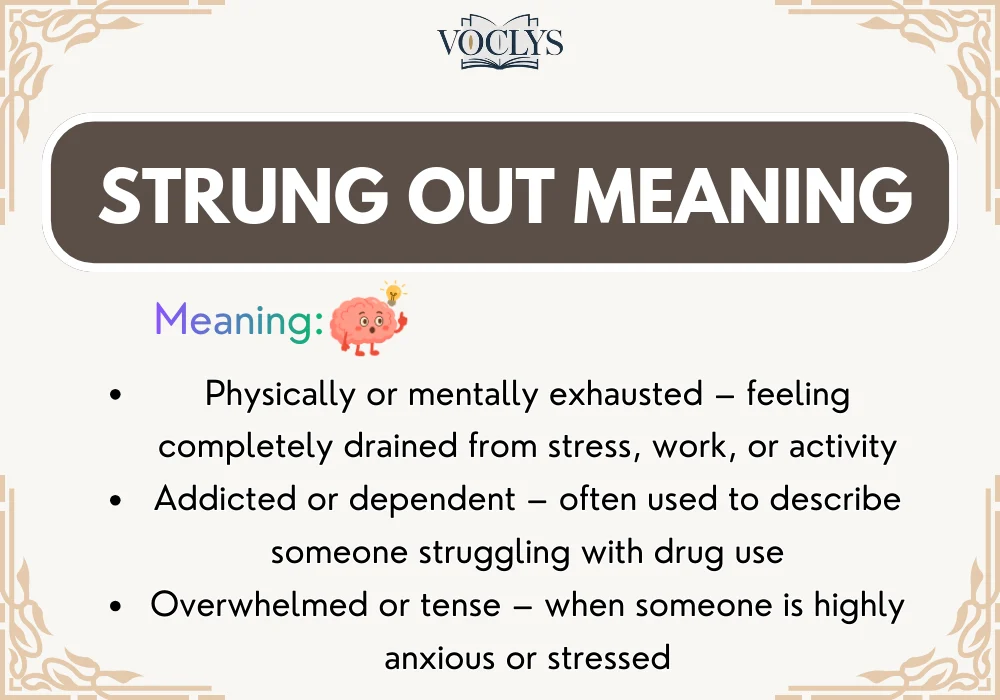
The phrase strung out has a few related meanings depending on context:
- Physically or mentally exhausted – feeling completely drained from stress, work, or activity
- Addicted or dependent – often used to describe someone struggling with drug use
- Overwhelmed or tense – when someone is highly anxious or stressed
The origin of strung out comes from the idea of being “stretched tight,” like a rope. It started appearing in everyday language in the 20th century and later became popular in modern slang and online chat.
In texting or social media, people mostly use strung out to describe feeling exhausted, stressed, or emotionally drained, often in a casual or relatable way.
Why Strung Out Meaning Matters In Chat Culture
Small phrases like strung out carry emotion. Knowing the meaning helps you:
- Understand tone in messages
- Respond appropriately to friends or online posts
- Recognize when someone is overwhelmed or stressed
- Join casual conversations without misunderstanding
It’s more than just knowing the definition—it’s about connecting with the feeling behind the words.
How to Use Strung Out in Texts or Chat
1. To describe exhaustion or tiredness
Examples:
- I’ve been working all day I’m totally strung out
- Finals week has me strung out
- After that hike I’m so strung out
2. To describe emotional or mental stress
Examples:
- I’m strung out from all the drama at work
- Planning this event has me completely strung out
3. To describe addiction (more serious)
Examples:
- He’s been strung out on pills for months
- She was strung out after years of drug use
In casual chat, the first two are more common. The third is serious and should be used carefully.
Examples of Strung Out in Conversations
Chat Example 1
A: You okay? You look tired
B: Yeah just strung out from work
Chat Example 2
A: I can’t handle all these deadlines
B: Same I’m totally strung out
Chat Example 3
A: He’s been using again
B: Wow he looks really strung out
Chat Example 4
A: Finals week is killing me
B: I feel strung out too
Notice how the tone can be casual, relatable, or serious depending on context.
Common Mistakes or Misunderstandings
1. Thinking it only means tired
Strung out can refer to exhaustion, stress, or addiction. Context is key.
2. Using it too lightly for serious addiction
Using strung out jokingly about stress is fine, but don’t use it lightly to describe someone struggling with addiction—it can be insensitive.
3. Confusing strung out with “stressed”
While similar, strung out often emphasizes extreme exhaustion or being pushed past limits, not just mild stress.
Related Slangs or Phrases
If you like strung out, you may also see these in chat:
- Burned out – exhausted from work or effort
- Wiped – very tired
- Shattered – physically or mentally exhausted
- Freaked out – anxious or overwhelmed
These all convey intensity of emotion or fatigue.
How to Decide When to Use Strung Out
Good times to use strung out
- Messaging friends after a long day
- Social media posts about busy schedules
- Gaming chats after a marathon session
- Casual texting about stress
Times you should avoid strung out
- Formal emails or professional communication
- Academic papers
- Situations involving serious addiction unless it’s appropriate context
Personal Insight On Strung Out Meaning
People use strung out because it’s expressive. It conveys exhaustion, stress, or emotional strain in a single phrase. In casual chat it makes messages relatable. You’ll often see it in funny memes, group texts about life struggles, or posts sharing daily frustrations.
It shows how language online captures emotion in a short, clear way.
Recent Usage of Strung Out in Online Chats
You might see messages like:
- I’m totally strung out after that workout
- Finals week has me strung out
- Can’t handle life right now I’m strung out
It’s a common phrase among students, young adults, and anyone expressing stress or tiredness in an informal way.
Tips for Using Strung Out Naturally
- Use it in casual chats with friends or social posts
- Match the context: exhaustion, stress, or emotional strain
- Avoid using it lightly for serious addiction topics
- Combine with emojis for extra emphasis (like 😩 or 😫)
Short Example Conversations Using Strung Out
Example 1
A: How’s your day?
B: Strung out from work but surviving
Example 2
A: I can’t keep up with all these deadlines
B: Same I’m totally strung out
Example 3
A: That hike was brutal
B: I’m strung out for sure
FAQs:
What does strung out mean?
It describes someone who is exhausted, stressed, or emotionally drained
Is strung out always about drugs?
No, in casual texting it usually refers to tiredness or stress. Only in serious context does it refer to addiction
Can I use strung out in professional writing?
No, it’s informal and best reserved for casual conversation
Why do people say strung out instead of tired or stressed?
It emphasizes extreme exhaustion or feeling pushed to the limit and sounds more expressive
Is strung out the same as burned out?
They are similar but burned out usually refers to long-term fatigue or work stress, while strung out can be short-term or emotional too
Conclusion
Strung Out Meaning helps you understand when someone is exhausted, stressed, or overwhelmed. In casual chat, it conveys intensity of feeling in a relatable way. Knowing it allows you to read messages better and respond appropriately.
Use strung out in relaxed conversations and posts to express tiredness or stress clearly. Avoid it in formal writing or sensitive situations. Language online continues to evolve, and phrases like strung out show how expressive digital communication can be.
Share your experiences using strung out or other slang in the comments and join the conversation.

Hi, I’m Alex, a content writer and language enthusiast here at Voclys. I love exploring words, meanings, and the way language shapes how we think and communicate. That passion is what inspired me to start sharing clear and simple word explanations with learners around the world.
Through Voclys, my goal is to make vocabulary learning easier, more enjoyable, and stress-free. I focus on breaking down word meanings in a way that anyone can understand — whether you’re a student, English learner, or just curious about language.
I truly believe that strong vocabulary leads to confident expression, and I’m excited to help you grow step-by-step on your learning journey.
Thanks for visiting Voclys — and I hope the words you learn here make a real difference in your daily life.
— Alex