Understanding literary terms is key to analyzing texts and appreciating how authors communicate ideas. One important term that often comes up in essays, discussions, and online chats about literature is Logos Meaning in Literature. If you’ve ever wondered what logos means, why it matters, and how to recognize it, this guide breaks it down in simple, relatable terms so you can use it confidently in discussions or writing.
What Does Logos Mean in Literature (Definition and Origin)
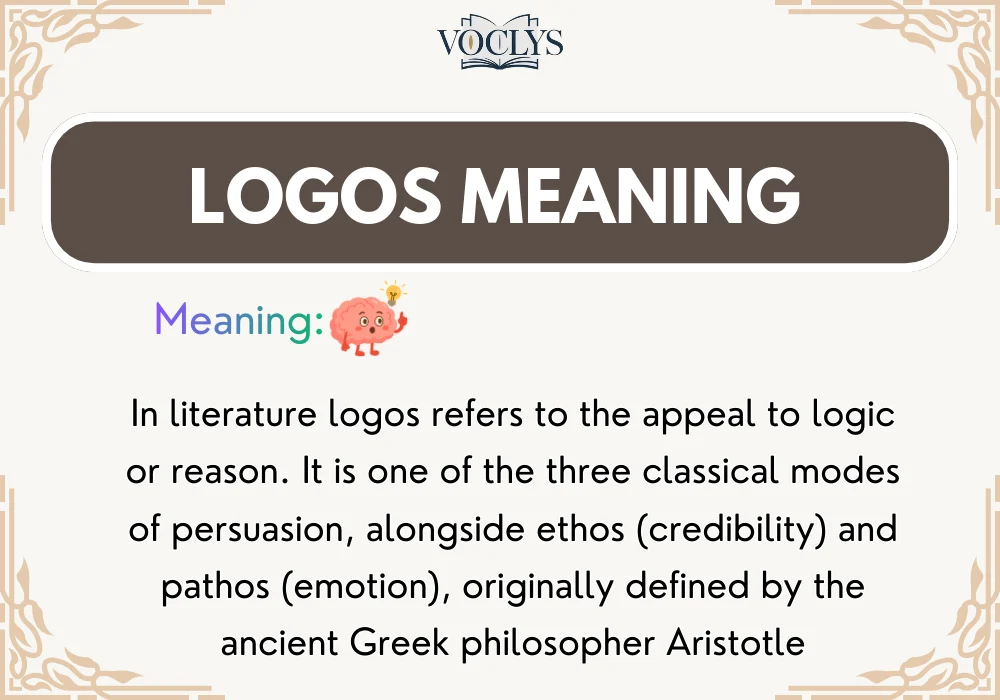
In literature logos refers to the appeal to logic or reason. It is one of the three classical modes of persuasion, alongside ethos (credibility) and pathos (emotion), originally defined by the ancient Greek philosopher Aristotle.
Key points about logos:
- It relies on facts, statistics, examples, and reasoning
- It is used to convince or persuade the audience through rational thinking
- In writing or speeches, it ensures the argument feels credible and structured
For example, when a writer presents clear evidence, makes logical connections, or uses cause-and-effect reasoning, they are employing logos.
The origin of the word comes from Greek, meaning word, reason, or principle, highlighting its connection to structured and rational communication.
Why Logos Matters in Literature
Understanding logos is essential because it helps you:
- Analyze how authors persuade or influence readers
- Identify strong and weak arguments in texts
- Improve your own writing and critical thinking
- Recognize the balance between logic and emotion in storytelling
Without logos, even passionate writing may fail to convince readers, because facts and logic are key to building trust and clarity.
How to Identify Logos in Texts
Writers often use logos in subtle ways. Look for:
- Facts and Statistics: Numbers, research findings, and historical data
- Example: “Over 70% of people surveyed preferred this method”
- Cause and Effect Reasoning: Explaining how one action leads to another
- Example: “Because pollution levels rise, public health suffers”
- Clear Examples and Evidence: Demonstrating points with real or hypothetical cases
- Example: “In the novel, the protagonist’s choice reflects social inequality”
- Logical Organization: Arguments that follow a coherent sequence or framework
When you spot these elements, the author is using logos to strengthen their argument.
Examples of Logos in Literature
Here are some practical examples from literature:
Example 1:
A novel describing economic struggles with detailed statistics:
“Nearly half the population lived below the poverty line, making survival a daily challenge.”
Example 2:
A character explaining why a plan will fail using logical reasoning:
“If we leave at night, the guards will see us. Therefore, waiting until dawn is safer.”
Example 3:
A poem illustrating cause and effect in nature:
“The river flooded because the rains were heavier than usual.”
These examples show how logos appeals to the reader’s rational thinking rather than emotions.
Common Mistakes or Misunderstandings
1. Confusing logos with emotion
Logos is logic-based, not emotional. Using feelings without reason is pathos, not logos.
2. Overusing facts without context
Dropping statistics alone does not always persuade; reasoning and connection to the argument are needed.
3. Ignoring structure
Even correct facts lose impact if the argument is chaotic or unclear.
4. Believing logos works alone
Effective persuasion usually blends logos with ethos and pathos to balance logic, credibility, and emotion.
Related Literary Concepts
- Ethos: Persuasion through credibility
- Pathos: Persuasion through emotion
- Rhetoric: The art of persuasion, combining logos, ethos, and pathos
- Argumentation: Structured reasoning used to convince or explain
Recognizing these alongside logos helps you analyze literature more effectively.
How to Use Logos in Your Writing
- Support your points with clear facts or evidence
- Explain the reasoning behind your statements
- Organize ideas in a logical sequence
- Combine logos with ethos (credibility) and pathos (emotion) for stronger impact
For example, in an essay, instead of just stating “Pollution is bad”, use logos:
“Pollution contributes to respiratory diseases in over 30% of urban populations, making regulation essential.”
Recent Usage of Logos in Literary Analysis
Modern literary blogs, discussion forums, and online classrooms often highlight logos when analyzing:
- Persuasive essays
- Argumentative novels
- Critical commentary
- Social issue narratives
For instance, a discussion post might say: “The author uses logos effectively in chapter 3 to show the economic disparity with clear examples and statistics.”
Tips for Spotting Logos Naturally
- Look for numbers, facts, and data
- Watch for cause-and-effect statements
- Identify reasoning or logic supporting claims
- Separate emotional appeals (pathos) from logical reasoning
Following these tips will make identifying logos in any text easier and more accurate.
Short Example Conversations About Logos
Example 1
A: How does the author persuade readers here?
B: Mainly through logos, with statistics and clear reasoning.
Example 2
A: Is this argument emotional or logical?
B: Logical, it’s using facts and cause-effect reasoning.
Example 3
A: I keep hearing about logos in class
B: It just means appealing to reason instead of emotion.
FAQs:
What is logos in literature?
It is the appeal to logic or reason in a text, used to persuade readers through facts and reasoning
How is logos different from pathos?
Logos relies on logic and evidence, while pathos appeals to emotions and feelings
Can logos be used in storytelling?
Yes, authors use logical sequences, cause-effect relationships, and evidence to make narratives believable
Why is logos important in essays?
It strengthens arguments by providing credible reasoning, making your writing persuasive and clear
Is logos the same as facts?
Not exactly. Facts are part of logos, but logos also includes logical reasoning and structured argument
Conclusion
Logos Meaning in Literature refers to the logical and reason-based part of persuasion in texts. From ancient Greek rhetoric to modern novels, essays, and critical writing, logos helps authors build convincing arguments using facts, evidence, and logical reasoning. Recognizing logos improves your reading comprehension, essay writing, and ability to analyze literary texts critically.
When reading or writing, pay attention to how facts, cause-effect reasoning, and structured arguments support the main point. Understanding logos ensures you can spot strong arguments and strengthen your own writing with clear logic and evidence.
Have you noticed examples of logos in your favorite books or essays? Share them in the comments and join the discussion.

Hi, I’m Alex, a content writer and language enthusiast here at Voclys. I love exploring words, meanings, and the way language shapes how we think and communicate. That passion is what inspired me to start sharing clear and simple word explanations with learners around the world.
Through Voclys, my goal is to make vocabulary learning easier, more enjoyable, and stress-free. I focus on breaking down word meanings in a way that anyone can understand — whether you’re a student, English learner, or just curious about language.
I truly believe that strong vocabulary leads to confident expression, and I’m excited to help you grow step-by-step on your learning journey.
Thanks for visiting Voclys — and I hope the words you learn here make a real difference in your daily life.
— Alex