Have you ever met someone who just keeps talking without stopping? Maybe a friend who jumps from one topic to another or someone who speaks very fast and fluently. That is where Voluble Meaning comes in. This word is often used in English to describe a certain speaking style and personality. Understanding Voluble Meaning helps you improve your vocabulary and also describe people more accurately in conversations writing and even exams.
In this guide you will learn everything about Voluble Meaning in a simple and practical way so you can use it confidently in real life.
What Does Voluble Meaning Mean (Definition and Origin)
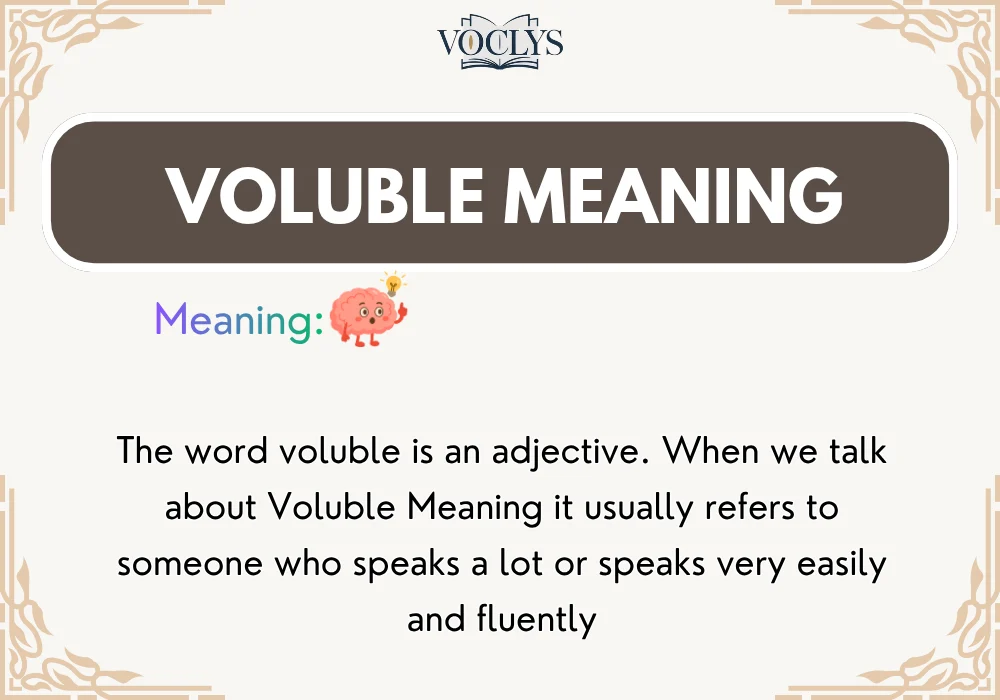
The word voluble is an adjective. When we talk about Voluble Meaning it usually refers to someone who speaks a lot or speaks very easily and fluently.
Simple definition
Voluble means someone who talks a lot often very quickly and easily.
Key ideas behind the word
- Talks a lot
- Speaks smoothly and effortlessly
- Often speaks very fast
- Sometimes talks more than necessary
Origin of the word
The word comes from Latin where it is related to the idea of turning or flowing. Over time it started to describe speech that flows quickly and continuously.
Why Voluble Meaning Matters in Daily Life
Knowing Voluble Meaning is useful because it helps you describe people clearly. Instead of saying someone talks too much you can say they are voluble which sounds more precise and advanced.
It is especially helpful in:
- School essays
- English exams
- Job interviews
- Story writing
- Daily conversations
Using words like voluble can make your communication sound more confident and expressive.
How to Use Voluble in Sentences
You can use voluble when talking about a person’s speaking style.
Basic sentence examples
- She is a voluble speaker who can talk for hours
- He became voluble when discussing his favorite topic
- The child was cheerful and voluble at the party
In daily conversation
- My friend gets very voluble when he talks about cricket
- The host was so voluble that no one else could speak
In writing
- The character is portrayed as a voluble and energetic personality
- Her voluble nature made her stand out in the group
Examples of Voluble Meaning in Conversations
Example 1
A: Why did you not get a chance to speak
B: Because he was so voluble and did not stop talking
Example 2
A: How was the meeting
B: One person was very voluble and dominated the discussion
Example 3
A: Tell me about her
B: She is friendly but quite voluble
These examples show how Voluble Meaning fits naturally in real conversations.
Common Mistakes or Misunderstandings
Many learners misunderstand Voluble Meaning. Here are some common mistakes.
1. Thinking voluble always means positive
It can be positive or negative depending on context. It may mean expressive or it may suggest someone talks too much.
2. Confusing voluble with loud
A person can be voluble without being loud. It is about how much and how easily they talk not volume.
3. Using it for writing instead of speaking
Voluble is mainly used for speech not writing.
4. Overusing the word
Using it too often can sound unnatural. Use it where it fits best.
Related Words and Similar Expressions
Understanding related words can help you use Voluble Meaning better.
Similar words
- Talkative
- Chatty
- Expressive
- Fluent
- Eloquent
Opposite words
- Quiet
- Reserved
- Silent
- Introverted
Each word has a slightly different tone but they are connected to the idea of communication.
How to Decide When to Use Voluble
Use voluble when
- Someone talks a lot
- Someone speaks easily and quickly
- You want a more advanced word than talkative
Avoid using voluble when
- Talking about writing
- Describing loudness
- In very casual situations where simple words work better
Personal Insight on Voluble Meaning
In real life I have noticed that people who are voluble often bring energy to conversations. They can keep discussions alive and interesting. However sometimes being too voluble can stop others from speaking. So the word carries both positive and negative shades depending on how it is used.
Learning words like voluble not only improves vocabulary but also helps you understand personalities better.
Real Life Usage of Voluble
You might hear or use voluble in situations like:
- Classroom discussions
- Interviews
- Public speaking events
- Friendly conversations
- Storytelling
For example a teacher might describe a student as voluble if they actively participate and speak frequently.
Tips for Using Voluble Naturally
- Use it to describe speaking habits
- Pair it with context like topic or situation
- Do not confuse it with loudness
- Use it in formal or semi formal communication
- Practice it in sentences to remember easily
Short Conversation Examples Using Voluble
Example 1
A: Why is he so popular
B: Because he is confident and voluble
Example 2
A: How was the speaker
B: Very voluble and engaging
Example 3
A: Describe your friend
B: She is kind and a bit voluble
FAQs:
What does voluble mean?
Voluble means someone who speaks a lot and expresses ideas easily and quickly
Is voluble a positive or negative word?
It can be both. It may describe someone expressive or someone who talks too much
Can voluble be used for writing?
No it is mainly used to describe speaking not writing
What is a simple synonym for voluble?
A simple synonym is talkative or chatty
What is the opposite of voluble?
The opposite would be quiet reserved or silent
Conclusion
Understanding Voluble Meaning helps you describe people who speak a lot in a more precise and expressive way. It refers to someone who talks easily quickly and often. Depending on the context it can be seen as a positive trait or a slight criticism.
By learning how to use voluble correctly you can improve both your speaking and writing skills. It adds depth to your vocabulary and helps you communicate more clearly.
Now it is your turn. Share your favorite English word or expression in the comments and keep building your vocabulary every day.

Hi, I’m Alex, a content writer and language enthusiast here at Voclys. I love exploring words, meanings, and the way language shapes how we think and communicate. That passion is what inspired me to start sharing clear and simple word explanations with learners around the world.
Through Voclys, my goal is to make vocabulary learning easier, more enjoyable, and stress-free. I focus on breaking down word meanings in a way that anyone can understand — whether you’re a student, English learner, or just curious about language.
I truly believe that strong vocabulary leads to confident expression, and I’m excited to help you grow step-by-step on your learning journey.
Thanks for visiting Voclys — and I hope the words you learn here make a real difference in your daily life.
— Alex