Some phrases hit harder than others and Death Before Dishonor Meaning is one of them. You may have seen it in movies tattoos songs or even in serious conversations. It sounds intense and powerful and that is exactly why people want to understand it clearly. Knowing Death Before Dishonor Meaning helps you grasp not only the words but also the deep values behind them like loyalty pride and honor.
This guide breaks it down in a simple and relatable way so you can understand where it comes from how it is used today and when it actually makes sense to use it.
What Does Death Before Dishonor Mean (Definition and Origin)
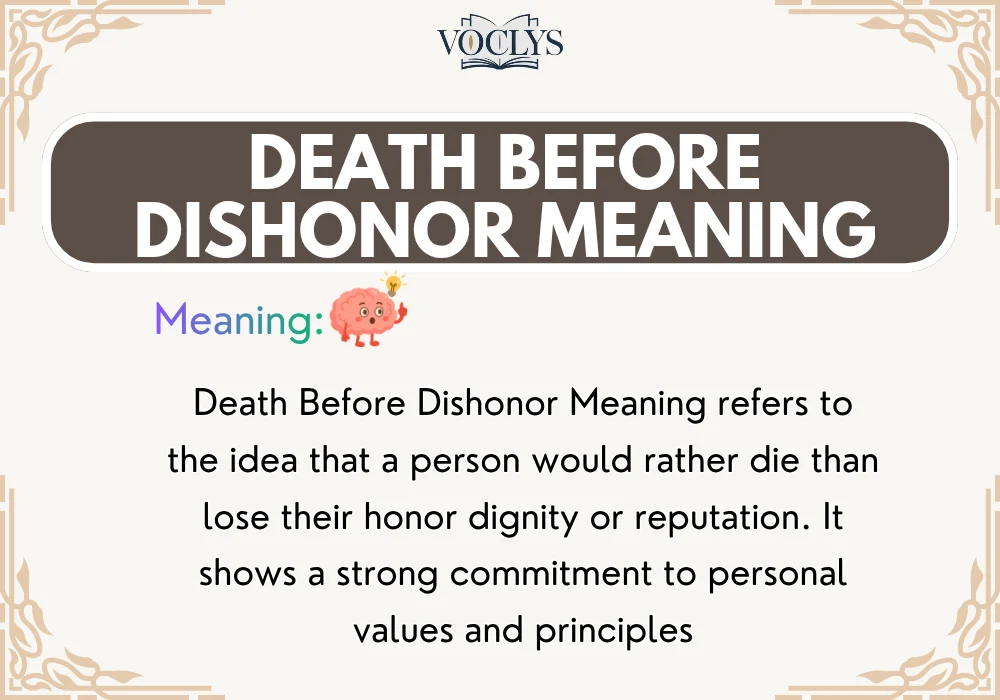
Death Before Dishonor Meaning refers to the idea that a person would rather die than lose their honor dignity or reputation. It shows a strong commitment to personal values and principles.
In simple words it means
I would rather face death than live with shame or betrayal
Origin of the phrase
The phrase has deep historical roots and has been used in:
- Military traditions
- Warrior cultures
- Ancient codes of honor
- Literature and storytelling
It reflects a time when honor was considered more important than life itself. Soldiers and warriors followed strict codes where losing honor was seen as worse than dying.
Even today the phrase carries that same strong emotional weight.
Why Death Before Dishonor Matters Today
Even though we no longer live by strict warrior codes the idea behind Death Before Dishonor Meaning still exists in modern life.
People use it to express:
- Loyalty to friends or family
- Standing by personal values
- Refusing to betray trust
- Protecting reputation
It is often used more symbolically now rather than literally. Most people do not mean actual death. They mean they strongly value their honor and integrity.
How to Use Death Before Dishonor in Conversations
This phrase is not casual slang like LOL or BRB. It carries serious meaning so it should be used carefully.
1. To express strong loyalty
Example:
- I would never betray my team. Death before dishonor.
2. To show personal values
Example:
- He refused to lie even under pressure. Death before dishonor.
3. In motivational or emotional context
Example:
- Stay true to yourself. Death before dishonor.
It is often used in speeches captions or serious discussions rather than everyday chatting.
Examples of Death Before Dishonor in Conversations
Example 1
A: Why did he refuse the deal
B: It went against his values. Death before dishonor.
Example 2
A: Would you ever betray your friend
B: Never. Death before dishonor.
Example 3
A: That tattoo looks intense
B: It says death before dishonor. It means everything to me.
Example 4
A: Why did she speak the truth even when it was risky
B: Because she believes in death before dishonor.
Common Mistakes or Misunderstandings
1. Taking it too literally
Most people do not actually mean they would die. It is usually symbolic.
2. Using it in casual situations
This phrase is very serious. Using it in jokes or light talk can sound awkward.
3. Misunderstanding dishonor
Dishonor does not just mean embarrassment. It refers to deep moral failure like betrayal lying or breaking trust.
4. Overusing it
Because of its strong tone it should be used only when the situation truly fits.
Related Phrases or Expressions
Here are some similar expressions that carry related ideas:
- Honor above all
- Stay true no matter what
- Loyalty over everything
- Never betray your values
These phrases are less intense but still express strong principles.
How to Decide When to Use This Phrase
Good situations
- Talking about loyalty or integrity
- Motivational content
- Serious discussions
- Personal beliefs
Avoid using it when
- Chatting casually with friends
- Making jokes
- Talking about minor issues
- In professional emails
A simple rule
Use it only when the situation is serious and meaningful.
Personal Insight On Death Before Dishonor Meaning
This phrase has a strong emotional impact. It represents a mindset where values come first no matter the cost. While modern life is more flexible the idea still inspires people to stay honest loyal and true to themselves.
I have seen it used in tattoos quotes and personal stories where people connect it to their life experiences. It often represents strength character and identity.
Modern Usage of Death Before Dishonor
Today you will see this phrase in:
- Movies and series
- Tattoos
- Social media captions
- Music lyrics
- Motivational posts
People use it to express strong beliefs and identity rather than literal meaning.
Tips for Using Death Before Dishonor Correctly
- Use it in serious context
- Understand its emotional weight
- Avoid using it as a joke
- Make sure it matches the situation
- Use it to express real values
When used correctly it can be powerful and meaningful.
Short Example Conversations
Example 1
A: Why did he walk away from that opportunity
B: It went against his principles. Death before dishonor.
Example 2
A: Would you ever lie to save yourself
B: No. Death before dishonor.
Example 3
A: That quote sounds strong
B: It means honor is more important than life.
FAQs:
What does death before dishonor mean?
It means a person values honor so much that they would rather die than live with shame or betrayal
Is death before dishonor literal?
No it is usually symbolic and expresses strong values not actual intent
Where does death before dishonor come from?
It comes from ancient warrior cultures and military traditions where honor was extremely important
Can I use death before dishonor in daily conversation?
You can but only in serious situations because it carries a strong tone
What is dishonor in this phrase?
Dishonor refers to actions like betrayal lying or breaking trust that damage a persons integrity
Conclusion
Death Before Dishonor Meaning is about valuing honor integrity and loyalty above everything else. While it started in ancient traditions it still holds strong meaning today in a symbolic way. People use it to express deep commitment to their values and refusal to compromise their principles.
Use this phrase carefully because of its intensity. When used in the right context it can powerfully express strength character and loyalty.
Share your favorite phrase or powerful quote in the comments and keep the conversation going.

Hi, I’m Alex, a content writer and language enthusiast here at Voclys. I love exploring words, meanings, and the way language shapes how we think and communicate. That passion is what inspired me to start sharing clear and simple word explanations with learners around the world.
Through Voclys, my goal is to make vocabulary learning easier, more enjoyable, and stress-free. I focus on breaking down word meanings in a way that anyone can understand — whether you’re a student, English learner, or just curious about language.
I truly believe that strong vocabulary leads to confident expression, and I’m excited to help you grow step-by-step on your learning journey.
Thanks for visiting Voclys — and I hope the words you learn here make a real difference in your daily life.
— Alex