If you have ever uploaded a photo written a blog post or shared a file online you have already used something called Meta Data Meaning without even realizing it. It works quietly in the background but plays a huge role in how information is organized found and understood. Knowing Meta Data Meaning helps you better manage content improve visibility and understand how digital systems work.
This guide breaks everything down in a simple and friendly way so you can easily understand what metadata is and how to use it in real life.
What Does Meta Data Meaning Mean (Definition and Origin)
Meta Data Meaning refers to data that describes other data. In simple words metadata is information about information.
Let’s make it easier with examples:
- A photo file has metadata like date location and camera type
- A blog post has metadata like title author and description
- A song file has metadata like artist album and genre
So metadata does not show the main content itself but gives extra details about it.
The word metadata comes from two parts:
- Meta means about or beyond
- Data means information
So metadata literally means data about data.
Why Meta Data Meaning Matters
Metadata is everywhere in the digital world and it is extremely useful. Understanding Meta Data Meaning helps you:
- Find files quickly
- Organize content better
- Improve how content appears online
- Manage large amounts of data easily
Without metadata everything would feel messy and hard to search.
How Meta Data is Used in Everyday Life
You interact with metadata more than you think. Here are some common uses.
1. Photos and videos
When you take a picture your phone automatically saves metadata such as:
- Date and time
- Location
- Device used
This helps you sort and find your photos later.
2. Websites and blogs
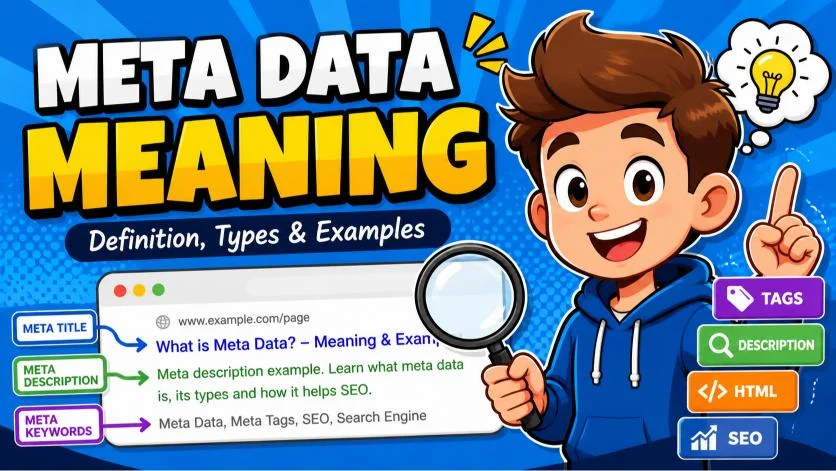
Every webpage contains metadata like:
- Page title
- Description
- Keywords
- Author name
This helps search engines understand what the page is about.
3. Social media
When you post content metadata helps platforms display:
- Captions
- Tags
- Location
- Time of posting
4. Files and documents
Documents and PDFs include metadata such as:
- File name
- Creation date
- Author
- File size
Examples of Meta Data Meaning in Real Life
Here are simple examples to understand it better.
Example 1
You click a photo
The image is the main data
The date location and camera info are metadata
Example 2
You read an article
The content is the data
The title author and description are metadata
Example 3
You listen to a song
The music is the data
The artist album and genre are metadata
Common Types of Metadata
1. Descriptive metadata
This tells what the content is about
Examples include title author and keywords
2. Structural metadata
This shows how content is organized
For example chapters in a book or sections in a document
3. Administrative metadata
This gives technical details
Examples include file type size and creation date
Common Mistakes or Misunderstandings
1. Thinking metadata is the main content
Metadata only describes content. It is not the actual content itself.
2. Ignoring metadata completely
Many people do not fill metadata properly which makes content harder to find.
3. Using incorrect or misleading metadata
Wrong metadata can confuse users and systems.
4. Believing metadata is only for experts
Anyone who uses a phone computer or internet uses metadata daily.
Related Terms You Should Know
Understanding Meta Data Meaning becomes easier when you know related terms:
- Data
- Database
- File properties
- Tags
- Categories
These all connect to how information is stored and organized.
How to Use Metadata Properly
Here are simple tips:
- Always give clear titles to files
- Add descriptions where possible
- Use accurate tags
- Keep information organized
- Avoid leaving metadata empty
These small steps can make a big difference.
Personal Insight on Meta Data Meaning
Metadata might sound technical but it is actually very practical. Think of it like labels on a box. Without labels you would not know what is inside. Metadata works the same way for digital content.
I have noticed that once people understand Meta Data Meaning they start organizing files better and finding things faster. It saves time and reduces confusion.
Where You Commonly See Metadata
You will find metadata in:
- Photos and videos
- Websites
- Social media posts
- Music files
- Documents and PDFs
- Emails
It is everywhere in the digital world.
How Meta Data Meaning Shapes the Digital World
Metadata plays a key role in how the internet works. It helps systems:
- Sort content
- Display results
- Understand context
- Deliver relevant information
Without metadata searching for anything online would be extremely difficult.
FAQs:
What is metadata in simple words?
Metadata is information that describes other data such as title date or author
Why is metadata important?
It helps organize find and understand digital content easily
Is metadata visible to users?
Some metadata is visible like titles while other parts work in the background
Can I edit metadata?
Yes in many files photos and documents you can edit metadata details
Is metadata used in everyday life?
Yes it is used in phones websites social media and almost all digital systems
Conclusion
Meta Data Meaning is all about understanding data that describes other data. It helps organize content improve accessibility and make digital systems work smoothly. From photos to websites metadata is everywhere and plays an important role in how information is stored and found.
Once you understand Meta Data Meaning you can manage your digital content more effectively and avoid confusion. It is a simple concept but very powerful in everyday use.
Share your thoughts or examples of metadata you have noticed in daily life and join the discussion.

Hi, I’m Alex, a content writer and language enthusiast here at Voclys. I love exploring words, meanings, and the way language shapes how we think and communicate. That passion is what inspired me to start sharing clear and simple word explanations with learners around the world.
Through Voclys, my goal is to make vocabulary learning easier, more enjoyable, and stress-free. I focus on breaking down word meanings in a way that anyone can understand — whether you’re a student, English learner, or just curious about language.
I truly believe that strong vocabulary leads to confident expression, and I’m excited to help you grow step-by-step on your learning journey.
Thanks for visiting Voclys — and I hope the words you learn here make a real difference in your daily life.
— Alex