Have you recently seen YFM in a text message, TikTok comment, Snapchat chat, or Instagram DM and wondered what it means? In most online conversations, YFM stands for “You Feel Me?” It’s a casual phrase people use to ask whether someone understands, agrees with, or relates to what they’re saying.
The abbreviation is popular among younger users and appears frequently in texting, social media posts, and online discussions. Since internet slang changes quickly, many people search for YFM to understand what someone really means when using it.
If you’re confused about YFM, this guide explains its meaning, usage, examples, and how people use it across different platforms.
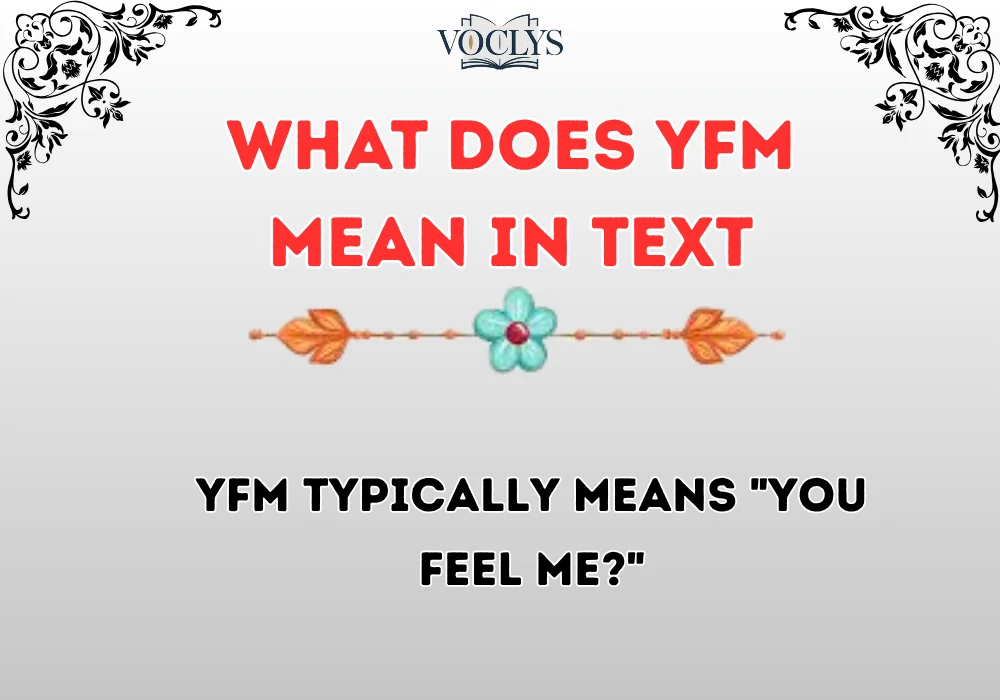
YFM Meaning In Text
YFM typically means “You Feel Me?”
It’s an informal internet abbreviation used when someone wants to know if another person understands their point, agrees with their opinion, or relates to their experience.
For example:
“Life has been really busy lately, YFM?”
The sender is basically asking:
“Do you understand what I mean?”
Is YFM Slang or an Acronym?
YFM is both an acronym and internet slang.
The letters come from:
Y = You
F = Feel
M = Me
While it’s technically an acronym, it’s commonly categorized as internet slang because it’s mostly used in casual online conversations.
What Does YFM Mean in Everyday Chat?
In everyday texting, YFM often means:
- Do you understand?
- Can you relate?
- Do you agree?
- Do you know what I mean?
People use it to make conversations feel more personal and engaging.
Examples:
- “That exam was way harder than expected, YFM?”
- “Sometimes you just need a break from everything, YFM?”
- “Good friends are hard to find, YFM?”
Where People Use YFM
YFM appears on many social platforms where casual communication is common.
TikTok
On TikTok, users often include YFM in captions and comments.
Examples:
- “Nobody talks about this enough, YFM?”
- “That feeling after finishing an exam, YFM?”
It helps creators connect with viewers by asking for agreement or understanding.
Snapchat
Snapchat users commonly use YFM during casual conversations with friends.
Examples:
- “Today’s been wild, YFM?”
- “I need a vacation already, YFM?”
The phrase feels natural because Snapchat chats are usually informal.
On Instagram, YFM appears in:
- Comments
- Captions
- Stories
- Direct messages
Examples:
- “Real friends support you no matter what, YFM?”
- “This weather is perfect, YFM?”
Friends often use YFM in group chats and personal conversations.
Examples:
- “We’ve been working nonstop this week, YFM?”
- “That restaurant is underrated, YFM?”
SMS
Even traditional text messaging includes YFM.
Examples:
- “Traffic was terrible today, YFM?”
- “Some days just don’t go as planned, YFM?”
Real Chat Examples
Example 1
A: Work has been exhausting lately.
B: Yeah, I totally get that.
A: YFM.
Example 2
A: Good music can completely change your mood, YFM?
B: Absolutely.
A: Glad you agree.
Example 3
A: Sometimes weekends feel too short, YFM?
B: Every single week.
A: Exactly.
Example 4
A: That movie ending was unexpected, YFM?
B: I didn’t see it coming either.
A: Same here.
Example 5
A: Real success takes time, YFM?
B: Definitely.
A: That’s what I’ve been saying.
Example 6
A: The older you get, the faster time feels, YFM?
B: So true.
A: Glad someone understands.
Example 7
A: It’s hard finding genuinely loyal friends, YFM?
B: Unfortunately, yes.
A: Exactly.
Example 8
A: This song is underrated, YFM?
B: It deserves more attention.
A: Facts.
Example 9
A: Traveling teaches you a lot about life, YFM?
B: I couldn’t agree more.
A: Same.
Example 10
A: Sometimes silence is better than arguing, YFM?
B: That’s true.
A: Glad we’re on the same page.
How to Reply When Someone Says “YFM”
Since YFM is asking whether you understand or agree, your response depends on your opinion.
Funny Replies
- Nah, explain it again.
- Maybe… my brain is loading.
- I feel you, kind of.
- You’re speaking facts today.
Casual Replies
- Yeah, I get you.
- Definitely.
- I know what you mean.
- For sure.
Friendly Replies
- Totally understand.
- I can relate to that.
- That’s a good point.
- I feel the same way.
Neutral Replies
- I understand.
- Makes sense.
- I see your point.
- That’s understandable.
Is YFM Rude or Offensive?
No, YFM is generally not rude or offensive.
It’s usually used in a friendly and conversational way. Most people use it simply to check whether someone understands their thoughts or feelings.
Is It Safe to Use?
Yes. YFM is considered harmless internet slang.
It’s commonly used among friends, classmates, and social media users without any negative meaning.
Is It Appropriate at School?
In casual conversations with friends, YFM is perfectly acceptable.
However, for essays, reports, or academic assignments, it’s better to avoid internet abbreviations.
Is It Appropriate at Work?
In professional emails or formal workplace communication, using YFM may seem too informal.
It’s generally better to use phrases like:
- Do you understand?
- Does that make sense?
- Do you agree?
Who Uses This Term?
YFM is most popular among younger internet users.
Gen Z Usage
Gen Z frequently uses YFM on:
- TikTok
- Snapchat
- Discord
- Group chats
The abbreviation fits naturally into fast-paced online conversations.
Millennials
Some millennials also use YFM, especially those familiar with texting culture and social media slang.
Common Online Communities
YFM often appears in:
- Social media comments
- Video captions
- Online discussions
- Messaging apps
- Community forums
How Often Is It Used?
YFM isn’t as common as abbreviations like LOL or IDK, but it still appears regularly in casual online communication.
Origin of the Term
YFM likely evolved from the spoken phrase:
“You feel me?”
The expression became popular in casual conversation long before social media existed.
People often used “You feel me?” when checking if someone understood their perspective or related to their experience.
Internet Culture Influence
As texting became more popular, users shortened common phrases into abbreviations.
This led to:
- LOL
- BRB
- IDK
- IMO
- YFM
The shorter version saved typing time while preserving the original meaning.
Is the Origin Certain?
Not entirely.
Unlike some slang terms that originate from a specific platform or community, YFM appears to have developed naturally from everyday speech and internet shorthand.
Comparison Table
| Term | Meaning | Type | Usage | Popularity |
|---|---|---|---|---|
| YFM | You Feel Me? | Acronym | Seeking understanding or agreement | Medium |
| IDK | I Don’t Know | Acronym | Expressing uncertainty | Very High |
| IDC | I Don’t Care | Acronym | Showing indifference | High |
| IMO | In My Opinion | Acronym | Sharing opinions | Very High |
| BRB | Be Right Back | Acronym | Temporary absence | High |
Real World Usage Example
Imagine two friends talking after a stressful week.
One friend says:
“I’ve been working nonstop and barely had time to relax, YFM?”
The other friend replies:
Yeah, I completely understand.”
In this situation, YFM is simply asking whether the other person relates to the experience. It’s a quick and casual way to build connection during a conversation.
FAQs:
What does YFM mean in text messages?
YFM usually means “You Feel Me?” It asks whether someone understands or agrees with what’s being said.
What does YFM mean on TikTok?
On TikTok, YFM typically means “You Feel Me?” and is often used in captions and comments to connect with viewers.
Is YFM slang?
Yes. YFM is considered internet slang and an acronym commonly used in casual online conversations.
Is YFM rude or offensive?
No. YFM is generally friendly, informal, and not considered offensive.
How should you reply to YFM?
You can reply with phrases like “Yeah, I get you,” “Definitely,” “I understand,” or “I agree.”
Conclusion:
YFM stands for “You Feel Me?” and is commonly used to ask whether someone understands, relates to, or agrees with a statement. You’ll often see it on TikTok, Snapchat, Instagram, WhatsApp, and in text messages.
It’s a casual and friendly expression that’s safe to use among friends and online communities. However, it’s best avoided in formal writing or professional communication. Understanding YFM makes it easier to follow modern internet conversations and texting slang

Hi, I’m Mike Grobgaard, founder of Lexonr. I write about meanings, internet slang, biblical terms, and modern expressions in a simple yet engaging way. My goal is to help readers understand the deeper story behind every word they search for.