Understanding powerful English words can instantly improve your vocabulary and confidence. One such word that often confuses learners is Abeyance Meaning. You may have seen it in legal documents formal emails news articles or academic writing. It sounds serious and slightly complex but once you understand it the word becomes very easy to use.
In this complete guide you will learn the exact Abeyance Meaning simple explanations real life examples correct usage common mistakes and related words. By the end you will feel confident using it naturally in conversations and writing.
What Does Abeyance Meaning Mean Definition and Origin
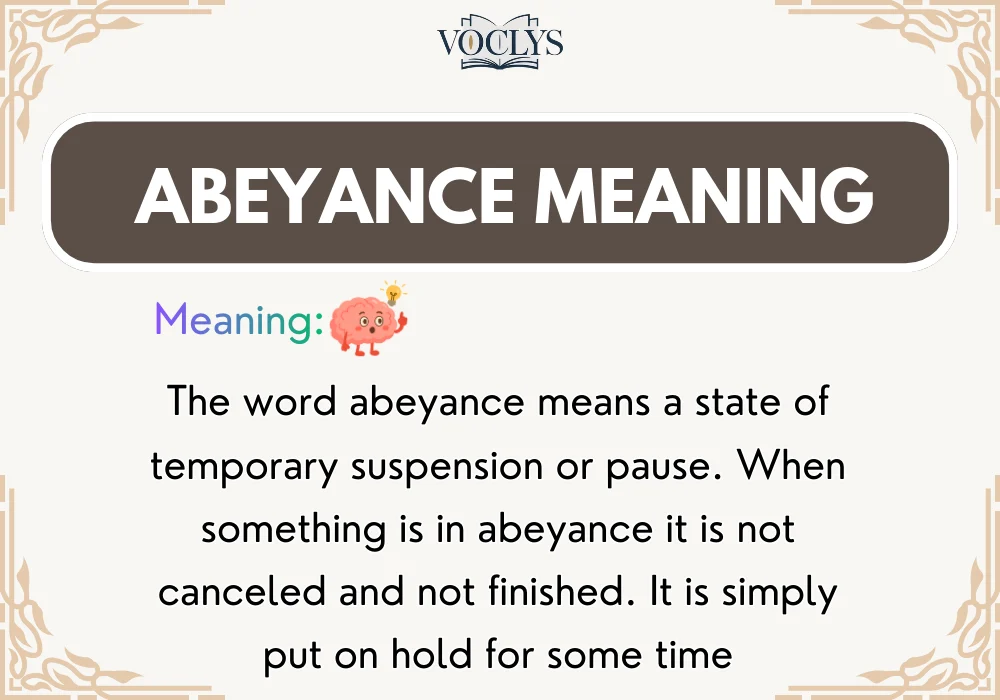
The word abeyance means a state of temporary suspension or pause. When something is in abeyance it is not canceled and not finished. It is simply put on hold for some time.
In simple words
Abeyance Meaning = temporarily stopped or delayed
The word comes from Old French and was originally used in legal language. Over time it became common in formal English especially in professional and academic settings.
You will usually hear it in serious contexts such as
- Legal matters
- Company decisions
- Government policies
- Projects or plans
It is not a slang word. It is considered formal vocabulary.
How to Use Abeyance in Sentences
The word is commonly used in this structure
in abeyance
Here are clear examples:
- The project was put in abeyance due to budget issues
- The decision remains in abeyance until further notice
- His promotion is in abeyance while the investigation continues
- The law was held in abeyance during the review
Notice something important. Abeyance does not mean permanent cancellation. It only means temporary pause.
Real Life Examples of Abeyance Meaning
Let us look at relatable situations.
Workplace Example
Your company plans to launch a new product. Suddenly funding becomes tight. The company decides to pause the launch. The product is not canceled. It is just delayed.
You can say
The launch has been placed in abeyance.
Legal Example
A court case might be paused while waiting for new evidence.
The case is held in abeyance.
Personal Example
You decide to pause your higher education for one year to focus on work.
My studies are in abeyance for now.
These examples show how useful the word can be.
Common Mistakes People Make
Even advanced learners sometimes misuse Abeyance Meaning. Here are common mistakes to avoid.
1. Thinking it means canceled
Wrong. Abeyance means temporarily paused not permanently stopped.
2. Using it in casual chat
It is a formal word. It sounds strange in normal texting between friends.
Instead of
My gym plan is in abeyance bro
You would normally say
I paused my gym plan.
3. Forgetting the common phrase
The most natural structure is
in abeyance
Not
on abeyance
at abeyance
Those are incorrect.
Synonyms of Abeyance
Here are similar words you can use depending on context:
- Suspension
- Delay
- Postponement
- Interruption
- Standstill
- Temporary halt
Each word has slightly different nuance but they are close in meaning.
Difference Between Abeyance and Suspension
Many learners confuse these two.
Abeyance often suggests waiting for a decision or future action.
Suspension can sometimes imply punishment or official action.
Example:
- The membership is in abeyance while documents are reviewed.
- The student received suspension due to misconduct.
So context matters.
When Should You Use Abeyance
Use it when:
- Writing formal emails
- Preparing academic essays
- Drafting business reports
- Discussing legal or official matters
- Explaining delays professionally
Avoid using it in:
- Casual WhatsApp chats
- Informal social captions
- Friendly gaming conversations
It is best suited for professional tone.
Advanced Sentence Structures
To sound more confident try these:
- The agreement was held in abeyance pending approval.
- All negotiations remain in abeyance until further clarification.
- The policy has fallen into abeyance over time.
Notice how it often appears with words like pending until further notice while awaiting review.
Personal Insight on Abeyance Meaning
Many learners feel intimidated by formal words like this. But once you understand that Abeyance Meaning simply means temporary pause it becomes easy. I personally find it very useful in professional writing because it sounds precise and polished.
Instead of saying
The project is paused
Saying
The project is in abeyance
sounds more refined and official.
Common Contexts Where You Will See Abeyance
You will often see this word in:
- Legal agreements
- Corporate announcements
- Government policies
- Academic discussions
- News articles
It rarely appears in everyday spoken conversation unless the situation is formal.
Quick Practice Examples
Try understanding these:
- His membership remains in abeyance.
- The reform proposal is currently in abeyance.
- The committee placed the decision in abeyance.
In all three sentences something is paused temporarily.
FAQs:
What is the simple meaning of abeyance?
It means a temporary pause or suspension not a permanent cancellation.
Is abeyance a formal word?
Yes it is mostly used in legal business and academic contexts.
What is the difference between abeyance and cancellation?
Abeyance means temporarily stopped while cancellation means permanently ended.
How do you use abeyance in a sentence?
The most common phrase is in abeyance such as The plan is in abeyance.
Can abeyance be used in daily conversation?
It can be used but it may sound too formal for casual everyday talk.
Conclusion
Understanding Abeyance Meaning helps you improve your formal vocabulary and communicate delays clearly. It simply means a temporary suspension or pause not a cancellation. The word is commonly used in professional legal and academic settings where clarity and precision matter.
If you want to sound more polished in writing learning how to use abeyance correctly is a great step. Just remember it usually appears in the phrase in abeyance and refers to something paused for now but possibly continuing later.
Share your favorite advanced English word in the comments and keep growing your vocabulary.

Hi, I’m Alex, a content writer and language enthusiast here at Voclys. I love exploring words, meanings, and the way language shapes how we think and communicate. That passion is what inspired me to start sharing clear and simple word explanations with learners around the world.
Through Voclys, my goal is to make vocabulary learning easier, more enjoyable, and stress-free. I focus on breaking down word meanings in a way that anyone can understand — whether you’re a student, English learner, or just curious about language.
I truly believe that strong vocabulary leads to confident expression, and I’m excited to help you grow step-by-step on your learning journey.
Thanks for visiting Voclys — and I hope the words you learn here make a real difference in your daily life.
— Alex