Understanding medical or health-related terms is important, especially when you see them online or in messages from doctors, friends, or health forums. One such term is Prognosis Meaning. You might wonder what it really refers to and how it is used in different contexts. Learning about Prognosis Meaning helps you understand health updates, medical advice, and discussions clearly. This guide explains everything in a simple friendly way so you can use it confidently.
What Does Prognosis Meaning Mean (Definition and Origin)
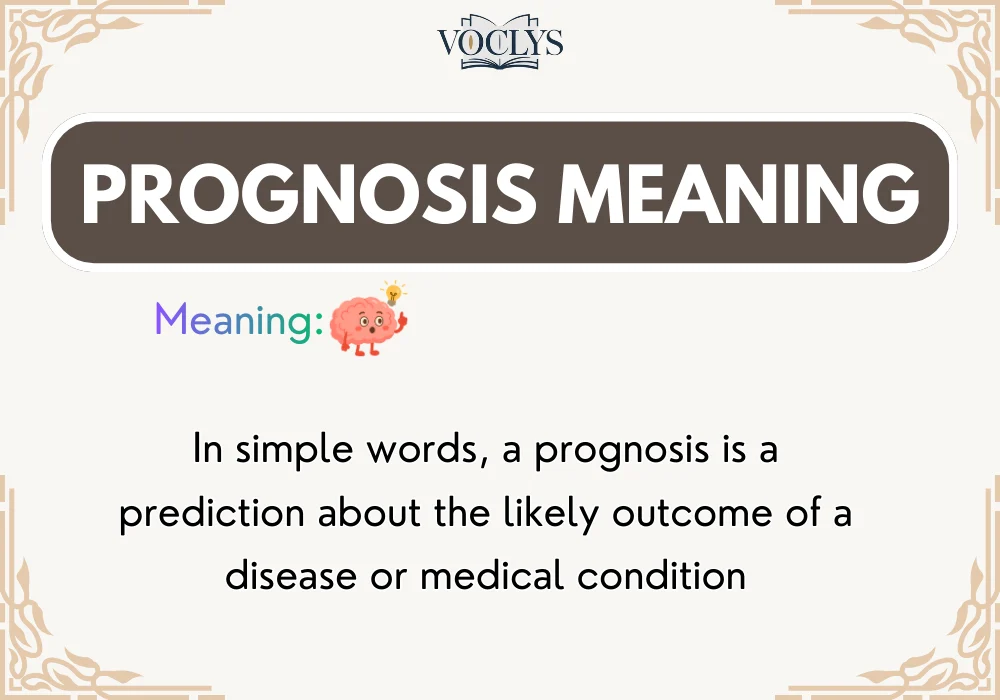
Prognosis is a term most often used in healthcare and medicine. It comes from the Greek word prognōsis, meaning foreknowledge. In simple words, a prognosis is a prediction about the likely outcome of a disease or medical condition.
Key points about Prognosis Meaning:
- It predicts how a disease or condition might progress
- It can indicate the chances of recovery, improvement, or complications
- Doctors use it to guide treatment plans
- It is not always 100% certain but gives an informed estimate
So, when people search for Prognosis Meaning, they are looking to understand this prediction and what it implies for health or treatment.
Why Prognosis Meaning Matters
Understanding prognosis is important because:
- It helps patients and families prepare mentally and emotionally
- It guides treatment decisions
- It helps in planning for long-term care or lifestyle adjustments
- It reduces confusion when reading medical reports or online health forums
Knowing Prognosis Meaning gives you clarity and confidence when discussing health matters.
How to Use Prognosis in Conversations
1. Talking about health conditions
Examples:
- The doctor said my prognosis is good
- His prognosis after surgery is positive
- Her prognosis depends on how well she responds to treatment
2. Discussing risks or chances
Examples:
- The prognosis for full recovery is uncertain
- Early diagnosis can improve prognosis
- Lifestyle changes can sometimes improve prognosis
3. Sharing information online or in forums
Examples:
- I read that the prognosis for this condition can vary
- The prognosis of the patient was discussed by the team
- Can anyone explain the prognosis after chemotherapy?
Examples of Prognosis in Real Conversations
Conversation 1
A: Did the doctor say anything about her condition?
B: Yes, the prognosis is optimistic, and she should recover fully
Conversation 2
A: What’s the prognosis for his illness?
B: They said it’s manageable if he follows the treatment plan
Conversation 3
A: I don’t understand my prognosis
B: Basically, it’s the doctor’s prediction of how your condition might progress
Common Mistakes or Misunderstandings
1. Thinking prognosis is a guarantee
A prognosis is an estimate, not a certainty. Outcomes can change based on treatment, age, or other factors.
2. Confusing prognosis with diagnosis
A diagnosis identifies the condition. A prognosis predicts how it may progress.
3. Assuming prognosis is always negative
A positive prognosis is possible and common, especially with early treatment or mild conditions.
4. Ignoring context
Prognosis can vary widely depending on disease severity, age, health history, and other variables.
Related Terms
- Diagnosis – Identifying the disease or condition
- Treatment plan – Steps taken to improve health
- Outcome – Result or end state of a condition
- Recovery rate – Likelihood of returning to normal health
Tips for Discussing Prognosis
- Always clarify if you don’t understand medical terms
- Ask your healthcare provider about what influences the prognosis
- Remember it is an estimate, not a prediction set in stone
- Use simple language when talking to friends or family
Recent Usage of Prognosis in Online Discussions
You may see prognosis in health forums, social media posts, or news articles:
- “The prognosis for patients who start treatment early is much better”
- “Doctors are optimistic about the prognosis after surgery”
- “Lifestyle changes can positively impact the prognosis of chronic illness”
Short Example Conversations Using Prognosis
Example 1
A: What’s the prognosis for the flu?
B: Usually full recovery in a week or so
Example 2
A: Doctor mentioned the prognosis is good
B: That’s great news
Example 3
A: I am worried about my prognosis
B: Don’t worry, it is only an estimate, and treatment can help
FAQs:
What does prognosis mean?
It refers to the predicted outcome or likely course of a disease or medical condition
Is prognosis always negative?
No, prognosis can be positive, neutral, or uncertain depending on the condition and treatment
How is prognosis different from diagnosis?
Diagnosis identifies the disease while prognosis predicts how it may progress
Can prognosis change over time?
Yes, it can improve or worsen depending on treatment, lifestyle, and health changes
Why is understanding prognosis important?
It helps patients and families make informed decisions, prepare mentally, and plan treatment
Conclusion
Prognosis Meaning is all about understanding the likely outcome of a medical condition. It is a prediction based on knowledge, experience, and medical data, not a guarantee. Knowing prognosis helps you communicate effectively with doctors, friends, and family, and make informed choices about care and lifestyle.
Use the term confidently in conversations or online discussions about health, but always remember it is an estimate. Understanding prognosis empowers you to approach health matters with clarity and confidence.
Share your experience or questions about medical terms in the comments and join the discussion.

Hi, I’m Alex, a content writer and language enthusiast here at Voclys. I love exploring words, meanings, and the way language shapes how we think and communicate. That passion is what inspired me to start sharing clear and simple word explanations with learners around the world.
Through Voclys, my goal is to make vocabulary learning easier, more enjoyable, and stress-free. I focus on breaking down word meanings in a way that anyone can understand — whether you’re a student, English learner, or just curious about language.
I truly believe that strong vocabulary leads to confident expression, and I’m excited to help you grow step-by-step on your learning journey.
Thanks for visiting Voclys — and I hope the words you learn here make a real difference in your daily life.
— Alex