If you’ve ever browsed anime or manga forums social media or streaming sites you might have seen the term Shounen and wondered what it really means. Understanding Shounen Meaning is key if you want to follow conversations, pick the right shows, or just sound like a true fan. This guide explains everything in simple language so you can use the term confidently when talking about anime or manga.
What Does Shounen Meaning Mean (Definition and Origin)
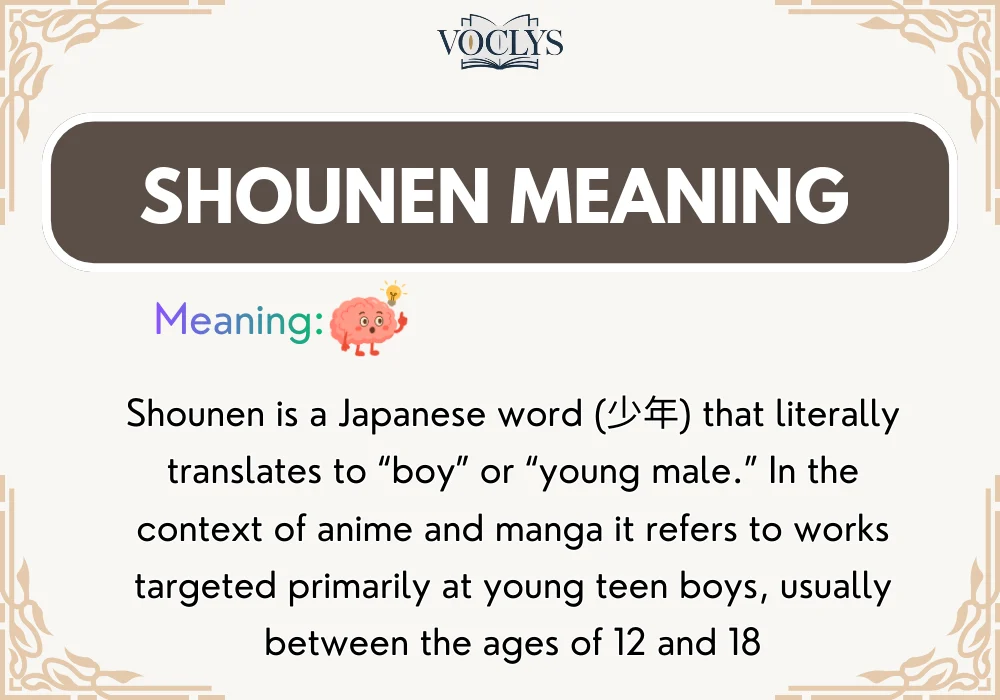
Shounen is a Japanese word (少年) that literally translates to “boy” or “young male.” In the context of anime and manga it refers to works targeted primarily at young teen boys, usually between the ages of 12 and 18.
Characteristics of Shounen stories include:
- Action-packed plots and adventure
- Main characters often male, energetic, and determined
- Themes of friendship rivalry and personal growth
- Humor mixed with serious moments
- Fast-paced storytelling
The term originated in Japan with manga magazines like Weekly Shounen Jump which published stories aimed at young male readers. Over time Shounen became recognized globally as a genre type for anime and manga.
Why Shounen Meaning Matters in Anime and Manga Culture
Knowing Shounen Meaning helps you:
- Choose shows that match your interests or age
- Understand discussions on anime forums or social media
- Recognize genre conventions and what to expect from the story
- Avoid confusing Shounen with other genres like Shoujo (for girls)
It’s more than a label; it helps fans communicate clearly about anime style and content.
How to Identify a Shounen Anime or Manga
Here are some key indicators that a series is Shounen:
- Male protagonist: Usually energetic, brave, or determined
- Action-driven plot: Battles, challenges, or competitions
- Friendship and rivalry: Themes often center around teamwork or rivalry
- Humor and emotional moments: Light-hearted jokes mixed with meaningful growth
- Length: Shounen series are often long-running with many episodes or chapters
Example:
- Naruto – Follows a young ninja chasing his dream
- My Hero Academia – Focuses on teen heroes growing their powers
Examples of Shounen in Conversations
Chat Example 1
A: Have you watched Naruto?
B: Yeah it’s a classic Shounen series
Chat Example 2
A: Is this anime Shounen or Shoujo?
B: Definitely Shounen – lots of action and male leads
Chat Example 3
A: Why do people love Shounen so much?
B: The characters and battles keep it exciting
Common Mistakes or Misunderstandings
1. Thinking Shounen is only for boys
While it is targeted at young males, Shounen anime and manga are enjoyed by all genders.
2. Confusing Shounen with Shoujo
Shoujo targets teen girls and often emphasizes romance or emotional drama over action.
3. Believing all Shounen is violent
Not all Shounen has fighting; some focus on comedy, sports, or slice-of-life adventures.
4. Assuming long-running equals Shounen
Some long-running series may be Seinen (for adults) but not technically Shounen.
Related Genres and Terms
- Shoujo: Teen girl audience, romance and drama
- Seinen: Adult male audience, often more mature themes
- Josei: Adult female audience
- Isekai: Fantasy worlds, often overlaps with Shounen
Tips for Using Shounen Naturally
- Use it when discussing anime or manga with fans
- Specify the type of Shounen if needed (action, comedy, fantasy)
- Don’t assume everyone knows Japanese terms; a brief explanation helps
- Enjoy it as a genre description rather than a strict label
Recent Usage of Shounen in Online Communities
You might see phrases like:
- “This is pure Shounen energy”
- “Shounen protagonists never give up”
- “I love classic Shounen tropes like friendship and rivalry”
Fans often use Shounen to quickly describe the type of story and tone.
Short Example Conversations Using Shounen
Example 1
A: Is Demon Slayer Shounen?
B: Yes, it has a male protagonist and action-driven plot
Example 2
A: Why do people say One Piece is iconic Shounen?
B: Because it’s long-running, adventurous, and all about friendship
Example 3
A: I prefer Shoujo more than Shounen
B: That’s fine, everyone has their favorite style
FAQs:
What does Shounen mean?
It refers to anime or manga aimed at young teen boys, featuring action adventure and friendship themes
Is Shounen only for boys?
No, people of all genders enjoy Shounen stories
How is Shounen different from Shoujo?
Shoujo targets teen girls and focuses on romance and emotional drama, while Shounen emphasizes action and male protagonists
Can adults enjoy Shounen?
Absolutely, many adults love Shounen for its storylines and character growth
What are popular Shounen examples?
Naruto, My Hero Academia, One Piece, Dragon Ball, and Demon Slayer
Conclusion
Shounen Meaning explains the genre of anime and manga primarily aimed at young male audiences, though it is enjoyed worldwide by everyone. It features energetic male leads, action-packed plots, and themes of friendship, rivalry, and growth. Understanding Shounen Meaning helps you choose shows, follow conversations, and join the fan community with confidence.
Whether you’re watching classic series or new hits, recognizing Shounen lets you appreciate the energy, humor, and adventure these stories bring.
Share your favorite Shounen series in the comments and join the discussion!

Hi, I’m Alex, a content writer and language enthusiast here at Voclys. I love exploring words, meanings, and the way language shapes how we think and communicate. That passion is what inspired me to start sharing clear and simple word explanations with learners around the world.
Through Voclys, my goal is to make vocabulary learning easier, more enjoyable, and stress-free. I focus on breaking down word meanings in a way that anyone can understand — whether you’re a student, English learner, or just curious about language.
I truly believe that strong vocabulary leads to confident expression, and I’m excited to help you grow step-by-step on your learning journey.
Thanks for visiting Voclys — and I hope the words you learn here make a real difference in your daily life.
— Alex