Understanding certain words can help you navigate conversations, messages, and even online debates with clarity. One such word that often appears in texts, social media, and forums is Turncoat Meaning. If you’ve come across it and wondered what it really means, this guide will break it down in a simple, friendly, and relatable way so you can recognize and use it confidently in conversation.
What Does Turncoat Meaning Mean (Definition and Origin)
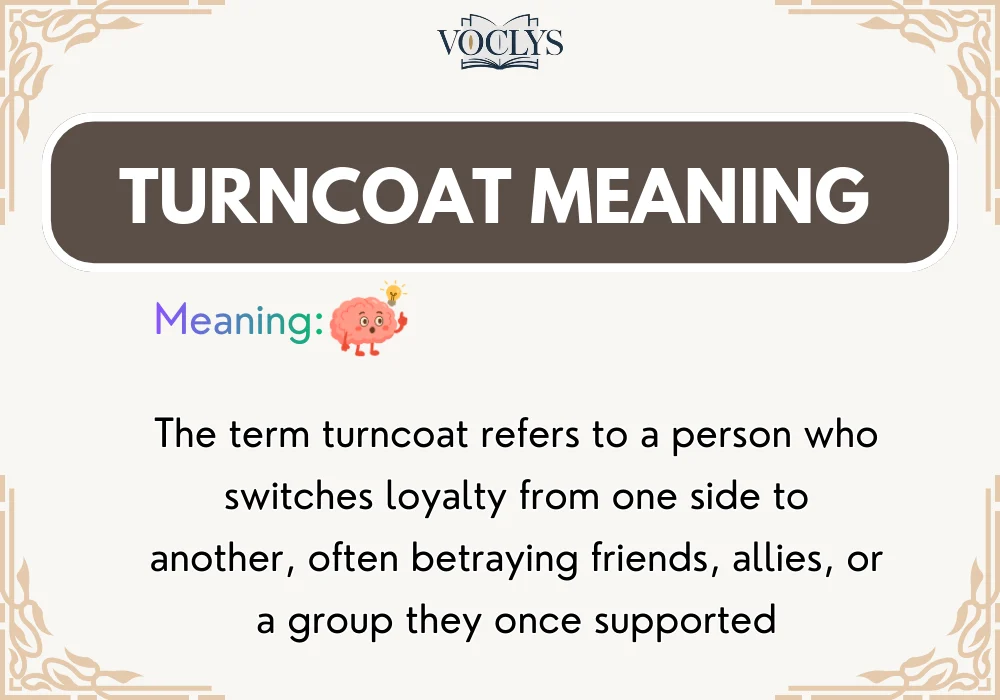
The term turncoat refers to a person who switches loyalty from one side to another, often betraying friends, allies, or a group they once supported. It has its roots in history: literally, a “turncoat” was someone who literally turned the coat of their uniform to signal changing sides during battle.
Over time, it evolved into a general expression for any traitor, betrayer, or someone who changes allegiance. Today, it is widely used in both serious contexts (politics, workplaces) and casual contexts (friend groups, games, or even fandoms).
Why Turncoat Meaning Matters in Conversation
Understanding turncoat is useful because it appears in discussions about trust, loyalty, and reputation. Using it correctly can:
- Help you describe situations clearly
- Avoid misunderstanding betrayal or switching sides
- Add precision to online debates or storytelling
Knowing Turncoat Meaning also helps you recognize when someone is hinting at betrayal, even in casual or playful chats.
How to Use Turncoat in Texts or Chat
1. Referring to betrayal
You can use turncoat to describe someone switching teams or sides.
Examples:
- I can’t believe he sided with the other group he’s such a turncoat
- She betrayed us in the game she’s a total turncoat
2. Playful or joking contexts
Sometimes it’s used humorously among friends.
Examples:
- You picked vanilla after saying chocolate forever you turncoat
- He switched fandoms again what a turncoat
3. Historical or literary references
You might see turncoat in discussions about history, books, or movies.
Examples:
- Benedict Arnold was a famous turncoat during the American Revolution
- The story has a secret turncoat who betrays the hero
Examples of Turncoat Meaning in Conversations
Chat Example 1
A: Did you see him join the rival team?
B: Yeah total turncoat move
Chat Example 2
A: She said she was loyal but then helped them
B: Classic turncoat behavior
Chat Example 3
A: Who switched sides in the game last night?
B: Mike he’s the turncoat
Chat Example 4
A: Turncoat meaning?
B: Someone who betrays or switches loyalty
Common Mistakes or Misunderstandings
1. Thinking it’s just about changing opinion
A turncoat is more than just changing mind; it implies betrayal or disloyalty.
2. Using it lightly in serious situations
Calling someone a turncoat casually in real-life sensitive situations can offend.
3. Confusing it with simple disagreement
A turncoat actually switches sides or allegiance, not just disagrees politely.
Related Words and Phrases
You might also encounter these in similar contexts:
- Betrayer
- Traitor
- Backstabber
- Defector
- Double-crosser
These can help you describe loyalty issues in texts or stories.
How to Decide When to Use Turncoat
Good times to use it
- Chatting about games or competitions
- Discussing fictional stories
- Commenting on political or social news
- Describing playful situations among friends
Times to avoid using it
- Serious personal conflicts without proof
- Professional settings unless carefully phrased
- When accusing someone publicly online
Personal Insight On Turncoat Meaning
The word turncoat has a strong tone and conveys betrayal clearly. I’ve seen it used both seriously and jokingly, especially in gaming groups or fandom chats. It shows how loyalty is valued and how language can make playful accusations feel dramatic and fun.
Recent Usage of Turncoat in Online Chats
- “He switched sides mid-match total turncoat”
- “Can’t trust her she’s a turncoat in every debate”
- “The character was revealed as a turncoat in the latest episode”
It’s often used in casual online talk to exaggerate or dramatize someone switching sides.
Tips for Using Turncoat Naturally
- Use it for betrayal or switching sides, not minor changes
- Match the tone: playful with friends, serious in debates
- Avoid overusing it; it carries a strong connotation
- Context is key: online games, stories, or history references work best
Short Example Conversations Using Turncoat
Example 1
A: Who betrayed us in the game?
B: Mark he’s the turncoat
Example 2
A: She helped the rival team again
B: That’s a turncoat move
Example 3
A: Turncoat meaning?
B: Someone who switches loyalty or betrays
FAQs:
What does turncoat mean?
A turncoat is someone who betrays or switches loyalty from one side to another
Is turncoat a negative word?
Yes it usually implies betrayal or disloyalty
Can turncoat be used jokingly?
Yes in casual chats, games, or playful situations it can be used humorously
Where does the word turncoat come from?
It comes from history when people literally turned their coats to show allegiance to the enemy
Is turncoat the same as traitor?
Yes they are similar but turncoat often emphasizes the act of switching sides
Conclusion
Turncoat Meaning refers to someone who switches loyalty or betrays a group, friend, or team. It can be used seriously to describe betrayal in history or politics, or playfully in games and chats. Understanding it helps you recognize shifts in loyalty and express situations clearly.
Use turncoat carefully in casual and playful conversations but avoid it in sensitive or professional contexts. It’s a word that carries drama, humor, and clarity all at once.
Share your favorite text word or slang in the comments and join the conversation.

Hi, I’m Alex, a content writer and language enthusiast here at Voclys. I love exploring words, meanings, and the way language shapes how we think and communicate. That passion is what inspired me to start sharing clear and simple word explanations with learners around the world.
Through Voclys, my goal is to make vocabulary learning easier, more enjoyable, and stress-free. I focus on breaking down word meanings in a way that anyone can understand — whether you’re a student, English learner, or just curious about language.
I truly believe that strong vocabulary leads to confident expression, and I’m excited to help you grow step-by-step on your learning journey.
Thanks for visiting Voclys — and I hope the words you learn here make a real difference in your daily life.
— Alex