Understanding the words people use online or in casual conversation helps you make sense of discussions, social posts, or even gaming chats. One term that comes up often is Thalassophobia Meaning. You might see it in memes, discussions about fears, or in casual chats and wonder what it really refers to. Learning Thalassophobia Meaning gives you clarity, helps you understand the context, and allows you to join conversations confidently. This guide breaks it down in simple, friendly language so you can grasp and use it naturally.
What Does Thalassophobia Meaning Mean (Definition and Origin)
Thalassophobia is a word made from Greek roots:
- Thalassa meaning sea
- Phobos meaning fear
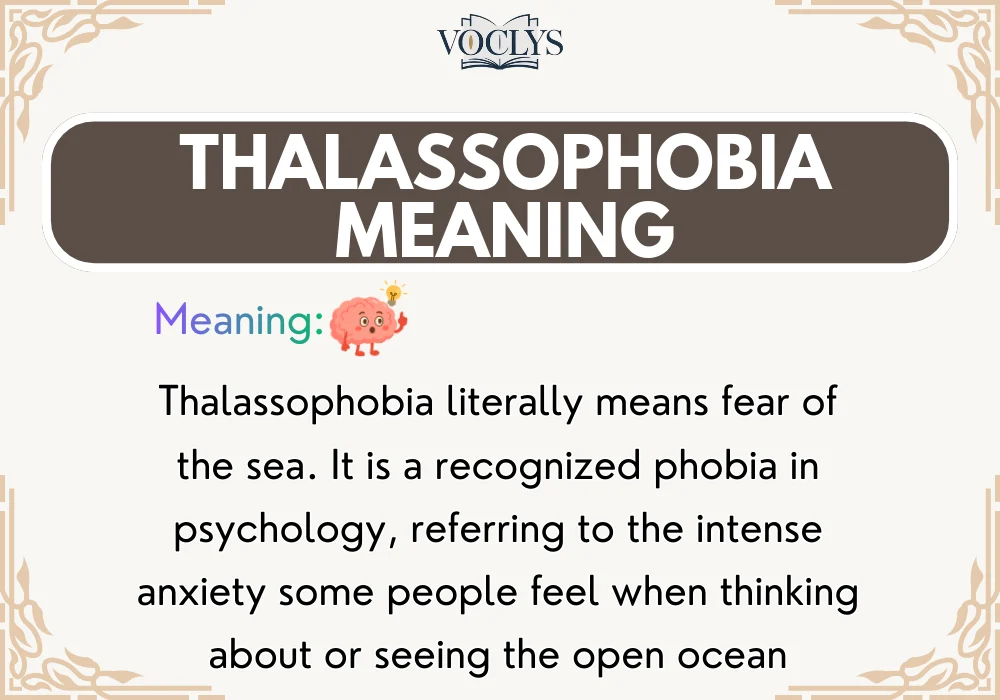
So Thalassophobia literally means fear of the sea. It is a recognized phobia in psychology, referring to the intense anxiety some people feel when thinking about or seeing the open ocean, large bodies of water, or even images of the sea.
In online and casual contexts, people often use the term humorously or dramatically to describe their unease with deep water, oceans, or even swimming pools.
The origin comes from classical Greek but its usage has grown in modern times due to internet culture, social media memes, and videos about deep sea creatures or vast oceans.
Why Thalassophobia Matters in Conversations
Understanding Thalassophobia Meaning is important because it:
- Explains why someone might avoid beaches, oceans, or aquariums
- Helps in conversations about fears or anxieties
- Adds clarity when people joke or reference “thalassophobia moments” online
- Lets you participate knowledgeably in discussions about phobias
Knowing this term also highlights how language combines medical, psychological, and casual internet usage.
How to Use Thalassophobia in Texts or Chat
1. Talking about real fear
You can use it literally to describe someone’s anxiety about the ocean.
Examples:
- I have thalassophobia so I never go scuba diving
- He gets anxious near big lakes because of his thalassophobia
2. Using it humorously or casually
Sometimes people exaggerate small discomforts for humor.
Examples:
- Seeing a tiny wave in my bathtub triggered my thalassophobia
- That video of the deep ocean creatures gave me serious thalassophobia
3. In memes or social media posts
It is often referenced online to describe extreme fear in funny or dramatic ways.
Examples:
- Caption on a deep-sea photo: “My thalassophobia is screaming”
- Meme of tiny fish in the ocean: “I’m safe… not really. Thalassophobia activated”
Examples of Thalassophobia Meaning in Conversations
Chat Example 1
A: Why won’t you go on the cruise?
B: I have thalassophobia, oceans freak me out
Chat Example 2
A: Did you see that deep-sea video?
B: Yeah, it gave me major thalassophobia
Chat Example 3
A: I think I’m scared of lakes now
B: Sounds like classic thalassophobia
Chat Example 4
A: Can’t watch ocean documentaries
B: Same here, thalassophobia is real
Common Mistakes or Misunderstandings
1. Thinking it’s just a dislike of water
Thalassophobia is more than disliking water—it is an intense fear or anxiety.
2. Using it lightly in formal writing
Avoid using it in school papers or professional contexts unless discussing psychology.
3. Confusing it with general aquaphobia
Aquaphobia is fear of water in general, thalassophobia specifically targets the sea or large bodies of water.
4. Overusing it for humor
While jokes are fine online, overusing it may confuse people unfamiliar with the term.
Related Phobias and Terms
- Aquaphobia – fear of water
- Hydrophobia – fear of water, sometimes related to rabies historically
- Naupathophobia – fear of ships or being on a boat
- Cymophobia – fear of waves
These are similar but slightly different, so knowing the nuances helps in precise conversations.
How to Decide When to Use Thalassophobia
Appropriate Situations
- Talking about personal fears
- Responding to ocean videos or stories
- Discussing psychological terms in casual conversation
- Social media or meme references
Times to Avoid Using It
- Serious medical advice unless accurate
- Academic papers not related to psychology
- Casual chats where people might not know the word
Personal Insight on Thalassophobia
I’ve noticed that many people share their thalassophobia experiences online because it is relatable and dramatic. Whether it’s a funny meme or a personal confession, the term connects people who understand the fear of vast waters. It shows how a clinical term can become part of internet and texting culture.
Recent Usage of Thalassophobia in Online Chats
You may see it in captions or chats like:
- “Watching deep-sea exploration gives me pure thalassophobia”
- “Thalassophobia kicking in every time I see a lake”
- “This ocean footage = instant thalassophobia moment”
These highlight both genuine anxiety and playful exaggeration.
Tips for Using Thalassophobia Naturally
- Use it to describe fear realistically or humorously
- Keep it casual in chat and social posts
- Avoid using it incorrectly in professional contexts
- Read the audience before joking about phobias
Short Example Conversations Using Thalassophobia
Example 1
A: Why aren’t you swimming today?
B: Thalassophobia, can’t do it
Example 2
A: That ocean video scared me
B: Same here, full-on thalassophobia
Example 3
A: I feel uneasy near big lakes
B: Classic thalassophobia moment
FAQs:
What does thalassophobia mean?
It means an intense fear of the sea or large open bodies of water
Is thalassophobia the same as aquaphobia?
No, aquaphobia is fear of water in general, thalassophobia specifically targets oceans and vast seas
Can thalassophobia affect daily life?
Yes, it can cause anxiety near beaches, lakes, or even in media showing large bodies of water
Why do people joke about thalassophobia online?
Because it is relatable and dramatic, making it popular for memes and funny posts
Is thalassophobia a recognized phobia?
Yes, it is a legitimate phobia recognized in psychology
Conclusion
Thalassophobia Meaning explains the fear of the sea or large bodies of water. It appears in both serious psychological contexts and playful internet discussions. Knowing it helps you understand conversations, memes, and online chats where people reference anxiety about the ocean.
Use the term thoughtfully. Keep it fun in casual chats and accurate when discussing psychology. Language evolves constantly, and thalassophobia is a great example of a serious term becoming part of everyday conversation.
Share your experiences with phobias or fears in the comments and join the conversation.

Hi, I’m Alex, a content writer and language enthusiast here at Voclys. I love exploring words, meanings, and the way language shapes how we think and communicate. That passion is what inspired me to start sharing clear and simple word explanations with learners around the world.
Through Voclys, my goal is to make vocabulary learning easier, more enjoyable, and stress-free. I focus on breaking down word meanings in a way that anyone can understand — whether you’re a student, English learner, or just curious about language.
I truly believe that strong vocabulary leads to confident expression, and I’m excited to help you grow step-by-step on your learning journey.
Thanks for visiting Voclys — and I hope the words you learn here make a real difference in your daily life.
— Alex