Some words carry deep history and powerful meaning and Reliquary Meaning is one of them. You might come across this word in books history lessons movies or even online discussions and wonder what it actually means. Understanding Reliquary Meaning helps you connect with history culture and religious traditions in a more meaningful way. This guide explains everything in a simple engaging way so you can clearly understand and even use the word confidently.
What Does Reliquary Meaning Mean (Definition and Origin)
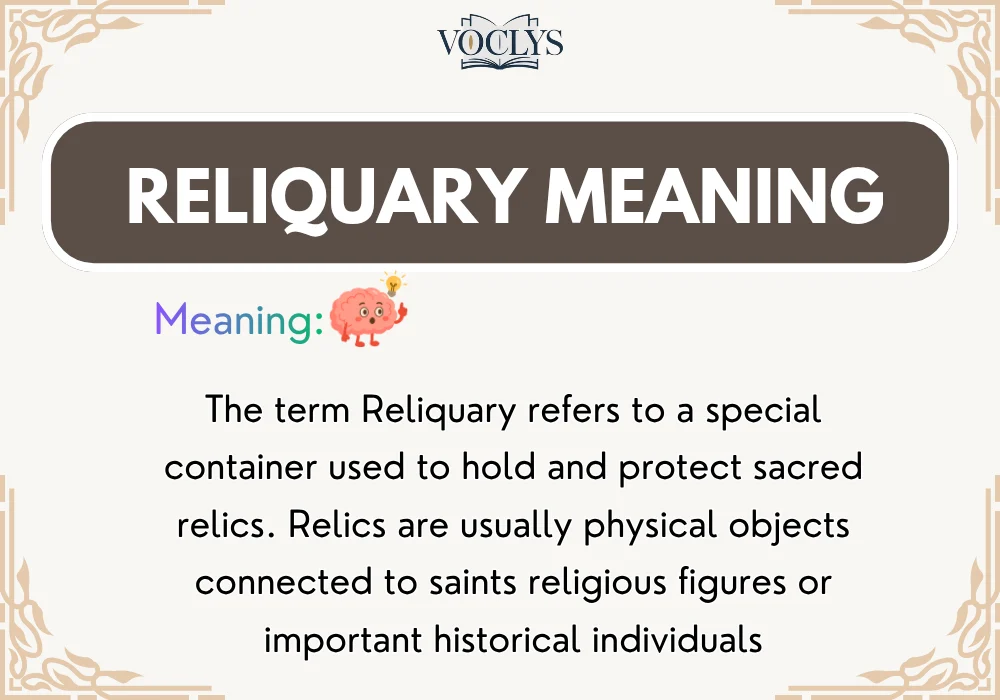
The term Reliquary refers to a special container used to hold and protect sacred relics. Relics are usually physical objects connected to saints religious figures or important historical individuals. These could include:
- Bones or body parts
- Clothing or personal items
- Objects associated with holy events
So Reliquary Meaning is simply the meaning of a container that holds these sacred items.
The word comes from the Latin word reliquiae which means remains or leftovers. Over time this evolved into reliquary which describes a vessel made to preserve and honor these remains.
Reliquaries are often beautifully designed and made from precious materials like gold silver glass or wood. They are not just containers but also symbols of respect faith and history.
Why Reliquary Meaning Matters
Understanding Reliquary Meaning is important because it connects language with culture and history. This word is often used in:
- Religious discussions
- Historical studies
- Art and museum descriptions
- Literature and storytelling
Knowing what a reliquary is helps you better understand these contexts and appreciate their deeper meaning.
Types of Reliquaries
Reliquaries come in different forms depending on their purpose and tradition.
1. Body part reliquaries
These are designed to hold specific parts like bones or skull fragments. Some are shaped like the body part they contain.
2. Casket reliquaries
These look like small boxes or chests and are used to store multiple relics.
3. Pendant reliquaries
These are smaller and worn as jewelry. People carry them as a sign of faith or protection.
4. Shrine reliquaries
Large structures placed in churches or temples that house important relics.
How Reliquary Meaning Is Used in Language
You might see the word reliquary used in sentences like:
- The church displayed an ancient reliquary containing sacred relics
- The museum featured a gold reliquary from the medieval period
- The reliquary was decorated with jewels and intricate carvings
In modern language it can also be used metaphorically to describe something that preserves memories or emotions.
Example:
- The old photo album felt like a reliquary of family memories
Examples of Reliquary Meaning in Conversations
Example 1
A: What is a reliquary
B: It is a container that holds sacred relics
Example 2
A: I saw a reliquary in a museum
B: Those are often very old and valuable
Example 3
A: Why are reliquaries important
B: They preserve items connected to religious figures
Common Mistakes or Misunderstandings
1. Confusing reliquary with relic
A relic is the sacred object itself. A reliquary is the container that holds it.
2. Thinking it is only religious
While mostly used in religion it can also appear in history art and metaphorical language.
3. Assuming all reliquaries look the same
They vary widely in size design and material depending on culture and time period.
Related Words and Concepts
To better understand Reliquary Meaning it helps to know related terms:
- Relic which is the sacred item
- Shrine which is a holy place
- Artifact which is a historical object
- Sanctuary which is a place of safety or worship
These words often appear together in historical or cultural discussions.
How to Use Reliquary Correctly
Here are some simple tips:
- Use it when talking about sacred or historical containers
- Do not confuse it with relic
- It fits well in educational historical or descriptive writing
- It can be used metaphorically for something that preserves memories
Personal Insight on Reliquary Meaning
The word reliquary feels powerful because it combines physical objects with emotional or spiritual meaning. It is not just about storing something. It is about honoring preserving and remembering. Even in modern life we create our own reliquaries like memory boxes photo albums or digital collections that hold important moments.
Modern Relevance of Reliquary Meaning
Even today Reliquary Meaning appears in:
- Museums and exhibitions
- Documentaries and films
- Religious ceremonies
- Literature and storytelling
It is a timeless concept that continues to hold value across cultures.
FAQs:
What is the simple meaning of reliquary?
A reliquary is a container used to hold and protect sacred relics
What is the difference between relic and reliquary?
A relic is the object while a reliquary is the container that holds it
Are reliquaries only used in religion?
Mostly yes but they can also appear in historical and cultural contexts
Can reliquary be used metaphorically?
Yes it can describe something that preserves memories or emotions
Why are reliquaries important?
They protect and honor items connected to important people or events
Conclusion
Understanding Reliquary Meaning gives you insight into history religion and cultural traditions. A reliquary is more than just a container. It is a symbol of respect preservation and memory. Whether seen in a museum church or book it carries deep significance.
By learning this word you can better understand historical texts and conversations while also appreciating how objects can hold powerful meaning.
Share your favorite unique word in the comments and keep expanding your vocabulary.

Hi, I’m Alex, a content writer and language enthusiast here at Voclys. I love exploring words, meanings, and the way language shapes how we think and communicate. That passion is what inspired me to start sharing clear and simple word explanations with learners around the world.
Through Voclys, my goal is to make vocabulary learning easier, more enjoyable, and stress-free. I focus on breaking down word meanings in a way that anyone can understand — whether you’re a student, English learner, or just curious about language.
I truly believe that strong vocabulary leads to confident expression, and I’m excited to help you grow step-by-step on your learning journey.
Thanks for visiting Voclys — and I hope the words you learn here make a real difference in your daily life.
— Alex