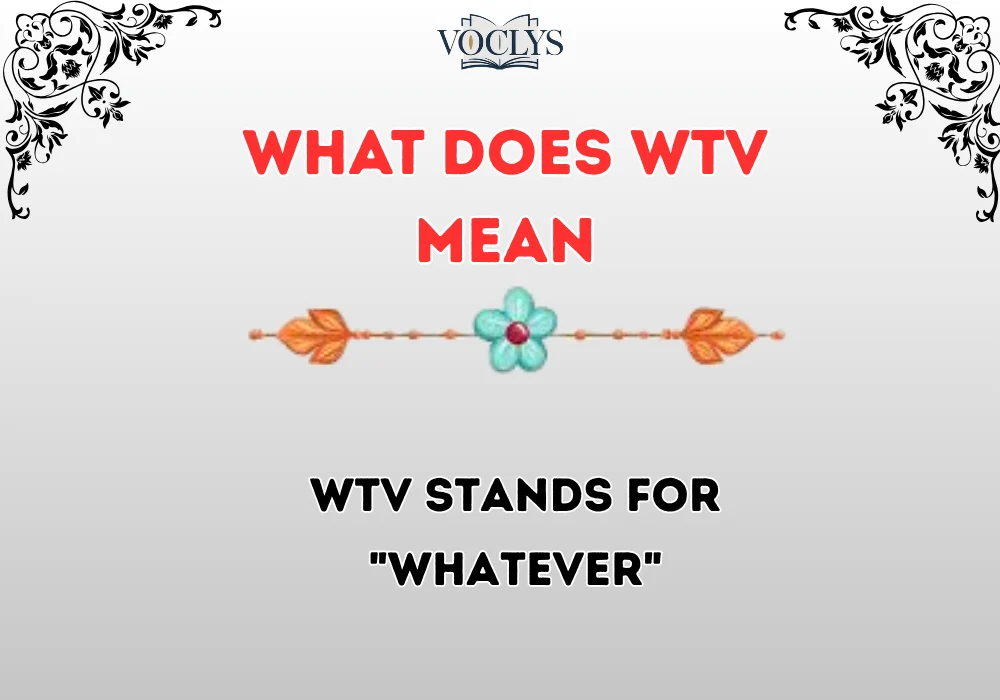
If you’ve seen WTV in a text message, TikTok comment, or Snapchat chat, it usually means “Whatever.” People use it to show indifference, agreement, frustration, or that they do not have a strong opinion about something.
The abbreviation is common across social media platforms like TikTok, Instagram, Snapchat, WhatsApp, and regular text messages. Because online conversations move quickly, users often shorten words, and WTV has become a popular example.
Many people search for the meaning of WTV after seeing it in a conversation and wondering whether it is rude, dismissive, or simply casual internet slang.
The good news is that the meaning is usually easy to understand once you know the context in which it is being used.
WTV Meaning in Text
WTV stands for “Whatever.”
It is a texting abbreviation used to shorten the word and make messages quicker to type. Depending on the conversation, WTV can express several different emotions.
For example:
- WTV, it’s your choice.
- WTV, I don’t really mind.
- WTV, let’s just go.
In most cases, the person is saying they are okay with any option or do not feel strongly about the topic.
Is WTV Slang or an Acronym?
WTV is considered a texting abbreviation and internet slang.
Unlike acronyms such as LOL or BRB, WTV is simply a shortened version of an existing word rather than the initials of a phrase.
What Does WTV Mean in Everyday Chat?
People commonly use WTV when they want to:
- Show they don’t care much about the outcome
- End a discussion
- Agree with any choice
- Express mild frustration
- Keep a conversation casual
Examples:
- WTV works for me.
- WTV you decide.
- WTV, I’m fine either way.
The exact meaning depends on the tone of the conversation.
Where People Use WTV
WTV appears on many social media and messaging platforms.
TikTok
On TikTok, users often write WTV in comments and replies.
Examples:
- WTV, it’s just a trend.
- WTV makes you happy.
The abbreviation helps keep comments short and casual.
Snapchat
Snapchat users frequently use WTV in private conversations.
Examples:
- WTV lol.
- WTV, let’s do that.
Because Snapchat chats are informal, WTV fits naturally into conversations.
Instagram users may include WTV in comments, captions, and direct messages.
Examples:
- WTV you think.
- WTV, I still like it.
It’s commonly used during discussions about photos, trends, and opinions.
In WhatsApp group chats, WTV often appears when people are making plans.
Examples:
- WTV works best for everyone.
- WTV you choose is fine.
SMS
Traditional texting remains one of the most common places to see WTV.
Examples:
- WTV, call me later.
- WTV you decide.
Its short length makes it convenient for quick replies.
Real Chat Examples
Example 1
A: Pizza or burgers tonight?
B: WTV, I’m good with either.
A: Let’s get pizza then.
Example 2
A: Which movie should we watch?
B: WTV you want.
A: Okay, let’s watch the new one.
Example 3
A: Do you want to come with us?
B: WTV, sure.
A: Great.
Example 4
A: Blue shirt or black shirt?
B: WTV looks best to you.
A: I’ll wear the black one.
Example 5
A: Should we leave now?
B: WTV, I’m ready.
A: Let’s go.
Example 6
A: Did you like the update?
B: WTV, it’s not a big deal.
A: Fair enough.
Example 7
A: What should we eat?
B: WTV honestly.
A: Sushi it is.
Example 8
A: Are you upset?
B: Nah, WTV.
A: Just checking.
Example 9
A: Which game do you want to play?
B: WTV everyone else wants.
A: Sounds good.
Example 10
A: Morning or evening?
B: WTV works better for you.
A: Evening then.
How to Reply When Someone Says “WTV”
The best reply depends on the tone and context.
Funny Replies
- WTV? That’s your final answer?
- Very passionate response there.
- Thanks for narrowing it down.
- Such strong feelings.
Casual Replies
- Okay, sounds good.
- I’ll decide then.
- Fair enough.
- Got it.
Friendly Replies
- Thanks for being flexible.
- Appreciate it.
- Sounds good to me.
- Glad you’re okay with it.
Neutral Replies
- Understood.
- Noted.
- We’ll go with that.
- Okay.
Is WTV Rude or Offensive?
WTV is usually not offensive, but it can sometimes sound rude depending on the situation.
For example:
- “WTV works for me” sounds casual and friendly.
- “WTV, I don’t care” can sound dismissive or annoyed.
Because text messages lack facial expressions and voice tone, people may interpret WTV differently.
Is It Safe to Use?
Yes. WTV is generally safe to use in casual conversations with friends, classmates, and family members.
Is It Appropriate at School?
Among friends and classmates, WTV is commonly used and widely understood.
However, it is usually best to avoid it in formal school assignments or professional communication.
Is It Appropriate at Work?
WTV is not ideal for formal workplace emails or business messages.
Instead of saying:
- WTV works.
You could say:
- Either option works for me.
That sounds more professional.
Who Uses This Term?
WTV is especially popular among younger internet users.
Gen Z Usage
Gen Z frequently uses WTV on:
- TikTok
- Snapchat
- Discord
- Group chats
The abbreviation fits perfectly into fast-moving digital conversations.
Millennials
Many millennials also understand and use WTV, particularly in texting and social media.
Frequent Internet Users
Anyone who regularly participates in online conversations is likely to encounter WTV at some point.
How Common Is It?
WTV has become increasingly common over the past few years because people prefer shorter and faster ways to communicate online.
Origin of the Term
WTV likely developed as a shortened version of the word “whatever.”
As texting became more popular, users started removing vowels and shortening words to save time.
Examples include:
- WTV = Whatever
- PLS = Please
- THX = Thanks
- MSG = Message
Internet Culture Influence
The rise of texting, instant messaging, and social media helped WTV spread quickly across different platforms.
Its simplicity made it easy to adopt.
Is the Origin Certain?
No specific person or platform is credited with creating WTV.
Like many internet abbreviations, it appears to have emerged naturally through everyday online communication.
Comparison Table
| Term | Meaning | Type | Usage | Popularity |
|---|---|---|---|---|
| WTV | Whatever | Abbreviation | Indifference or flexibility | High |
| IDK | I Don’t Know | Acronym | Uncertainty | Very High |
| IDC | I Don’t Care | Acronym | Indifference | High |
| IMO | In My Opinion | Acronym | Sharing opinions | Very High |
| BRB | Be Right Back | Acronym | Temporary absence | High |
Real World Usage Example
Imagine a group of friends trying to decide where to eat after school.
One friend asks:
“Should we go for pizza or tacos?”
Another friend replies:
“WTV, I’m fine with either.”
In this situation, WTV simply means the person has no strong preference and is happy with whichever option the group chooses.
This is one of the most common ways the abbreviation is used in everyday conversations.
FAQs:
What does WTV mean in text messages?
WTV usually means “Whatever.” It is used to show flexibility, indifference, or a lack of strong preference.
What does WTV mean on TikTok?
On TikTok, WTV generally means “Whatever” and is often used in comments, captions, and replies.
Is WTV slang?
Yes. WTV is considered internet slang and a texting abbreviation commonly used online.
Is WTV rude or offensive?
Not usually. However, depending on the tone and context, it can sometimes sound dismissive or uninterested.
How should you reply to WTV?
You can respond by making the decision yourself, acknowledging the person’s flexibility, or continuing the conversation normally.
Conclusion:
WTV stands for “Whatever” and is a popular texting abbreviation used across TikTok, Snapchat, Instagram, WhatsApp, and SMS conversations. Most people use it when they don’t have a strong opinion, are okay with any option, or want to keep a discussion casual.
While WTV is generally harmless, it can occasionally sound rude if used in a dismissive way. Understanding the context helps you interpret its meaning correctly and use it appropriately in your own conversations.

Hi, I’m Mike Grobgaard, founder of Lexonr. I write about meanings, internet slang, biblical terms, and modern expressions in a simple yet engaging way. My goal is to help readers understand the deeper story behind every word they search for.