If you’ve seen the phrase “circle back” in a text message, email, or social media conversation, it usually means to return to a topic, discussion, or task later. People use it when they want to revisit something after getting more information, having more time, or finishing other priorities.
You’ll often see this phrase in workplace chats, WhatsApp messages, text conversations, and even on platforms like LinkedIn. Many people search for its meaning because it can sound confusing if you’ve never heard it before.
While “circle back” is especially common in business communication, it’s also used casually among friends and family. Understanding what it means can help you avoid misunderstandings and communicate more effectively.
Circle Back Meaning in Text
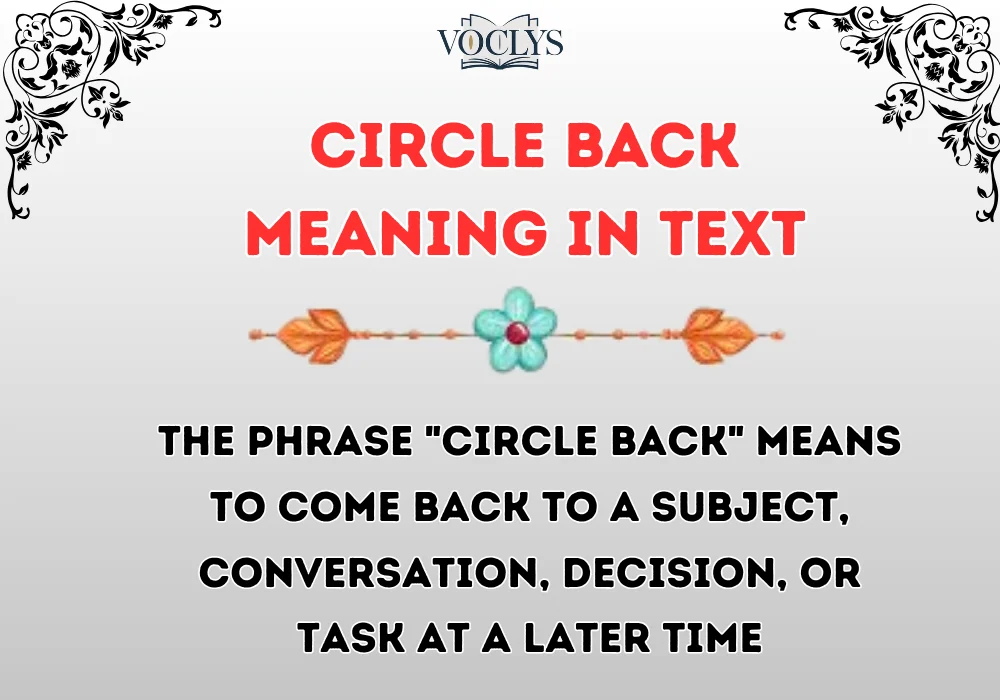
The phrase “circle back” means to come back to a subject, conversation, decision, or task at a later time.
Unlike many internet abbreviations, “circle back” is not slang or an acronym. It is an idiomatic phrase that has become very popular in modern communication.
For example:
“Let’s circle back on this tomorrow.”
This means:
“Let’s discuss this again tomorrow.”
Is Circle Back Slang or an Acronym?
No, “circle back” is neither slang nor an acronym.
It is a common expression used in both professional and casual conversations to indicate that a topic will be revisited later.
What Does Circle Back Mean in Everyday Chat?
In everyday conversations, people use “circle back” when:
- They need more time to think
- They are busy at the moment
- More information is needed
- A decision hasn’t been made yet
- They plan to continue the conversation later
Examples:
- Let’s circle back after lunch.
- I’ll circle back once I check the details.
- We can circle back next week.
Where People Use Circle Back
The phrase appears across many communication platforms.
TikTok
On TikTok, creators and commenters may use “circle back” when referring to updates or follow-up information.
Examples:
- I’ll circle back with Part 2 tomorrow.
- Let’s circle back after we see the results.
Snapchat
Friends often use the phrase casually on Snapchat.
Examples:
- I’m busy right now. Let’s circle back later.
- We’ll circle back after school.
Instagram users may use it in comments, direct messages, or stories.
Examples:
- Let’s circle back when the new collection drops.
- I’ll circle back after trying the product.
In WhatsApp group chats, people use it frequently when discussing plans.
Examples:
- Let’s circle back tonight and decide.
- We’ll circle back after everyone responds.
SMS
Regular text messages often include the phrase.
Examples:
- I’ll circle back once I arrive.
- Let’s circle back tomorrow.
Real Chat Examples
Example 1
A: Have you decided on the vacation destination?
B: Not yet. Let’s circle back this weekend.
A: Sounds good.
Example 2
A: Can you review my proposal?
B: I’m in meetings all day.
A: No worries.
B: I’ll circle back this afternoon.
Example 3
A: Did you order the tickets?
B: Not yet.
A: Okay.
B: Let’s circle back tomorrow.
Example 4
A: What do you think about the new design?
B: I need more time to review it.
A: Sure.
B: I’ll circle back later.
Example 5
A: Can we discuss the budget?
B: Let’s circle back after the team meeting.
A: Works for me.
Example 6
A: Did you finish the project?
B: Almost.
A: Great.
B: I’ll circle back when it’s complete.
Example 7
A: Are we still meeting tonight?
B: I’m not sure yet.
A: Okay.
B: Let’s circle back in an hour.
Example 8
A: What restaurant should we choose?
B: Let me check the reviews first.
A: Sure.
B: I’ll circle back soon.
Example 9
A: Have you heard from Sarah?
B: Not yet.
A: Keep me updated.
B: I’ll circle back when she replies.
Example 10
A: Did the package arrive?
B: I’m not home yet.
A: Alright.
B: I’ll circle back later and let you know.
How to Reply When Someone Says “Circle Back”
Funny Replies
- I’ll be waiting in the circle.
- Don’t circle too far away.
- I’ll keep spinning until you return.
- Circle accepted.
Casual Replies
- Sounds good.
- No problem.
- Sure, talk later.
- Okay, let me know.
Friendly Replies
- Looking forward to hearing back.
- Thanks for the update.
- Sounds like a plan.
- Talk soon.
Neutral Replies
- Understood.
- Noted.
- I’ll wait for your update.
- Okay, keep me posted.
Is Circle Back Rude or Offensive?
No, “circle back” is not rude or offensive.
In most situations, it is considered professional and polite because it communicates that the discussion is being postponed rather than ignored.
Is It Safe to Use?
Yes. The phrase is widely accepted in personal and professional communication.
Is It Appropriate at School?
Yes. Students and teachers may use it when discussing assignments, projects, or schedules.
Is It Appropriate at Work?
Absolutely. In fact, it is most commonly associated with workplace communication.
Examples:
- Let’s circle back after the meeting.
- I’ll circle back with additional details.
Who Uses This Term?
Professionals
Business professionals use “circle back” regularly in meetings, emails, and workplace chats.
Students
Students may use it when discussing group projects or assignments.
Gen Z
While Gen Z often prefers shorter slang terms, many still recognize and use “circle back,” especially in work or college settings.
Common Platforms
You’ll commonly see it on:
- Slack
- Microsoft Teams
- SMS
How Often Does It Appear Online?
The phrase remains extremely common in professional communication and continues to appear frequently across digital platforms.
Origin of the Term
The phrase “circle back” likely developed from the idea of physically moving in a circle and returning to a starting point.
Over time, it became a metaphor for returning to a topic or task after a break.
Internet Culture Influence
Although the phrase existed before the internet, digital communication helped popularize it even further.
Workplace messaging apps, email, and remote collaboration tools made “circle back” a common expression in business culture.
Is the Origin Certain?
Not entirely.
While the exact first use is unclear, the phrase has been part of English communication for many years and became especially popular in corporate environments during the 2000s and 2010s.
Comparison Table
| Term | Meaning | Type | Usage | Popularity |
|---|---|---|---|---|
| Circle Back | Return to a topic later | Phrase | Follow-up discussions | Very High |
| IDK | I Don’t Know | Acronym | Uncertainty | Very High |
| IDC | I Don’t Care | Acronym | Indifference | High |
| IMO | In My Opinion | Acronym | Sharing opinions | Very High |
| BRB | Be Right Back | Acronym | Temporary absence | High |
Real World Usage Example
Imagine you’re planning a weekend trip with friends.
One person asks where everyone wants to stay, but several people haven’t responded yet. Instead of making a decision immediately, someone says:
“Let’s circle back tomorrow once everyone has shared their preferences.”
In this situation, “circle back” means waiting until more information is available before continuing the discussion.
FAQs:
What does Circle Back mean in text messages?
It means to return to a conversation, topic, or task at a later time.
What does Circle Back mean on TikTok?
On TikTok, it usually means revisiting a topic or providing an update later.
Is Circle Back slang?
No. It is a common English phrase rather than internet slang.
Is Circle Back rude or offensive?
No. It is generally considered polite and professional.
How should you reply to Circle Back?
You can respond with phrases like “Sounds good,” “Okay,” or “Keep me posted.”
Conclusion:
Circle back” means returning to a discussion, decision, or task later. People commonly use it in texting, emails, workplace conversations, and social media when they need more time or information before continuing a discussion.
The phrase is professional, polite, and widely understood. While it’s perfectly acceptable in most situations, some people prefer simpler alternatives like “talk later” or “follow up later” in casual conversations.

Hi, I’m Mike Grobgaard, founder of Lexonr. I write about meanings, internet slang, biblical terms, and modern expressions in a simple yet engaging way. My goal is to help readers understand the deeper story behind every word they search for.