Understanding words like Permissive Meaning is important because they show up in everyday conversations education parenting discussions and even online chats. If you have ever heard someone described as permissive and wondered what that really means you are not alone. This guide breaks down Permissive Meaning in an easy relatable way so you can understand it clearly and use it correctly in real life.
What Does Permissive Meaning Mean (Definition and Origin)
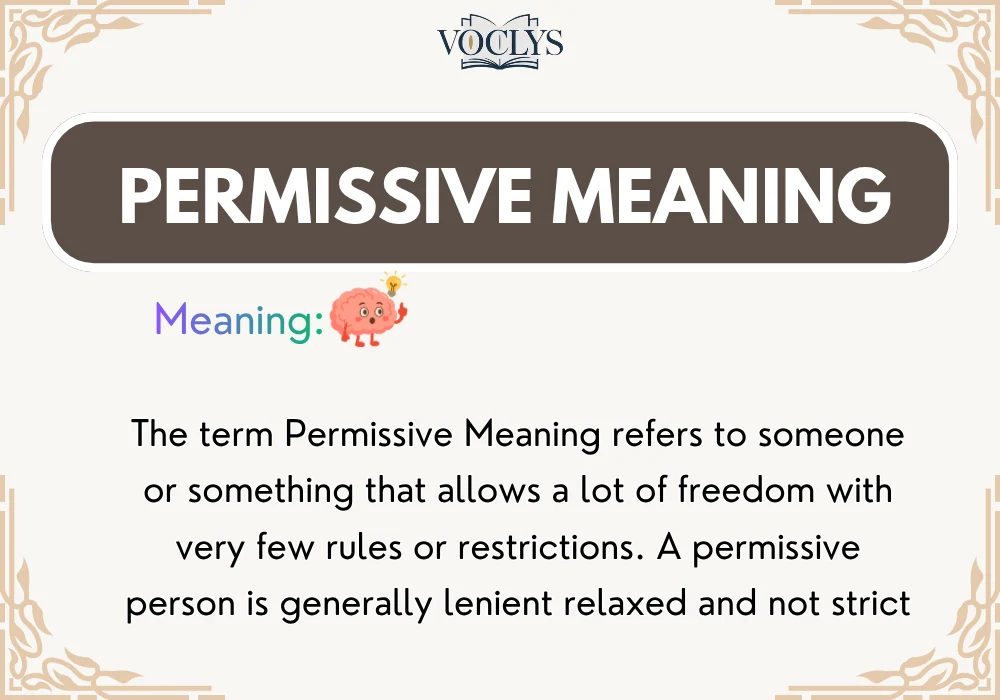
The term Permissive Meaning refers to someone or something that allows a lot of freedom with very few rules or restrictions. A permissive person is generally lenient relaxed and not strict.
The word comes from the idea of permission which means allowing something to happen. So a permissive attitude means giving others the freedom to act without much control.
Simple definition:
Permissive means allowing things to happen freely without strict limits or discipline.
Why Permissive Meaning Matters in Daily Life
You will often hear Permissive Meaning in real life situations such as parenting school rules or workplace behavior. Understanding this word helps you:
- Describe someone’s behavior accurately
- Understand parenting styles
- Recognize different types of authority
- Communicate more clearly in discussions
For example if someone says a parent is permissive they usually mean the parent is not very strict with their child.
How to Use Permissive in Sentences
1. Talking about people
You can use permissive to describe someone who allows a lot of freedom.
Examples:
- Her parents are very permissive and rarely say no
- The teacher is permissive so students feel relaxed
- He has a permissive attitude toward rules
2. Talking about rules or environments
It can also describe systems or environments.
Examples:
- The school has a permissive policy on dress code
- The company culture is permissive and flexible
- The environment feels permissive and open
3. In casual conversations
You might hear it in discussions about behavior.
Example:
- That game has a permissive approach to player choices
Examples of Permissive Meaning in Conversations
Conversation 1
A: Why is the child always on the phone
B: His parents are very permissive
Conversation 2
A: The rules here are so relaxed
B: Yes it is a permissive environment
Conversation 3
A: The teacher does not mind late work
B: Sounds like a permissive style
Conversation 4
A: They let employees work anytime
B: That is a permissive workplace
Common Mistakes or Misunderstandings
1. Thinking permissive is always positive
Being permissive can be good or bad depending on the situation. Too much freedom can sometimes lead to lack of discipline.
2. Confusing permissive with weak
Permissive does not always mean weak. It simply means less strict.
3. Using it in the wrong context
Do not use permissive when talking about strict or controlled environments.
4. Overusing the word
Use it only when describing freedom or leniency not every relaxed situation.
Related Words and Similar Terms
Here are some words similar to Permissive Meaning:
- Lenient
- Flexible
- Easygoing
- Tolerant
- Relaxed
Opposite words include:
- Strict
- Harsh
- Controlling
- Authoritative
How to Decide When to Use Permissive
Use permissive when
- Someone allows freedom
- Rules are relaxed
- Behavior is not controlled strictly
- Describing parenting or leadership style
Avoid using permissive when
- Rules are strict
- Discipline is strong
- Control is high
Personal Insight on Permissive Meaning
In real life I have seen that a permissive approach can feel comfortable at first because it gives freedom. But sometimes too much freedom without guidance can create confusion. That is why balance is important. Understanding Permissive Meaning helps you describe these situations more clearly.
Real Life Usage of Permissive
You may hear this word in:
- Parenting discussions
- School environments
- Workplace culture
- Psychology topics
- Social behavior conversations
For example permissive parenting is a well known style where parents are very loving but not strict with rules.
Tips for Using Permissive Naturally
- Use it when talking about freedom or lack of strict rules
- Pair it with context like parenting school or work
- Avoid using it in unrelated topics
- Keep your sentence simple and clear
Short Example Sentences
- The coach is permissive so players feel relaxed
- The rules are too permissive for a strict environment
- She has a permissive attitude toward deadlines
FAQs:
What does permissive mean?
It means allowing a lot of freedom with very few rules or restrictions
Is permissive a positive or negative word?
It can be both depending on the situation and context
Where is permissive commonly used?
It is often used in parenting education and workplace discussions
What is the opposite of permissive?
Strict or controlling are common opposites
Can permissive describe a person?
Yes it is often used to describe someone who is not strict
Conclusion
Permissive Meaning refers to allowing freedom with minimal restrictions. It is commonly used to describe people rules or environments that are relaxed and not strict. Understanding this word helps you communicate better especially when talking about behavior parenting or leadership styles.
Use permissive when describing flexibility and openness but remember that too much freedom can sometimes lead to challenges. Knowing the right context is key.
Share your favorite word or meaning in the comments and keep learning new expressions every day.

Hi, I’m Alex, a content writer and language enthusiast here at Voclys. I love exploring words, meanings, and the way language shapes how we think and communicate. That passion is what inspired me to start sharing clear and simple word explanations with learners around the world.
Through Voclys, my goal is to make vocabulary learning easier, more enjoyable, and stress-free. I focus on breaking down word meanings in a way that anyone can understand — whether you’re a student, English learner, or just curious about language.
I truly believe that strong vocabulary leads to confident expression, and I’m excited to help you grow step-by-step on your learning journey.
Thanks for visiting Voclys — and I hope the words you learn here make a real difference in your daily life.
— Alex