Have you ever eaten so much that you felt completely full and satisfied? That exact feeling is what Sated Meaning is all about. This word shows up in conversations books and even social media captions but many people are not fully sure how to use it correctly. Understanding Sated Meaning helps you express feelings of complete satisfaction in a more natural and precise way.
This guide explains everything in an easy and friendly style so you can use the word sated confidently in daily life.
What Does Sated Meaning Mean (Definition and Origin)
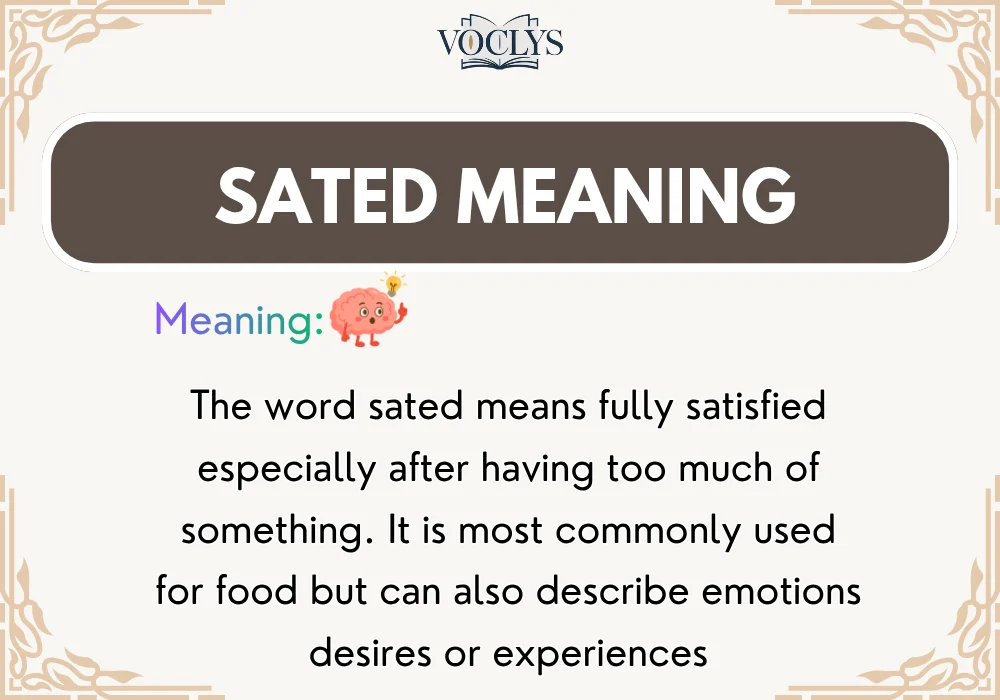
The word sated means fully satisfied especially after having too much of something. It is most commonly used for food but can also describe emotions desires or experiences.
Simple definition
- Sated means completely satisfied
- It often suggests you have had enough or even more than enough
Origin of the word
The word comes from an old Latin root that means to fill or satisfy. Over time it became part of English and is now used to describe a feeling of total fulfillment.
Quick understanding
- Hungry → Eat → Full → Sated
- Want something → Get it → Feel completely satisfied → Sated
Why Sated Meaning Matters In Everyday Language
Learning Sated Meaning helps you sound more natural and expressive. Instead of always saying full or satisfied you can use sated to add more depth.
It is especially useful when:
- Talking about food
- Describing emotional satisfaction
- Writing stories or captions
- Expressing that you have had enough
It gives your sentence a richer and slightly more polished tone.
How to Use Sated in Daily Conversations
You can use sated in different situations depending on what you want to express.
1. Talking about food
This is the most common use.
Examples:
- I feel completely sated after that meal
- That buffet left me sated for hours
- He ate until he was totally sated
2. Talking about desires or cravings
You can also use it for emotional or mental satisfaction.
Examples:
- Her curiosity was finally sated
- My craving for sweets is sated now
- His desire for adventure was never fully sated
3. Describing experiences
Examples:
- After the trip I felt sated and happy
- Watching that series left me sated
Examples of Sated Meaning in Conversations
Example 1
A: Are you still hungry
B: No I am completely sated
Example 2
A: Did you enjoy the dinner
B: Yes I feel fully sated
Example 3
A: Do you still want dessert
B: Not really I am already sated
Example 4
A: Did that movie satisfy you
B: Yes it left me emotionally sated
Common Mistakes or Misunderstandings
1. Confusing sated with just full
Being full is normal. Being sated often means fully satisfied sometimes even more than needed.
2. Using it only for food
While food is the main use you can also use it for feelings desires and experiences.
3. Using it in very casual slang chats
The word sated sounds slightly formal. It may not fit in very casual texting.
4. Mixing it with similar words incorrectly
Do not confuse it with:
- Satisfied which is more general
- Full which is only about food
Related Words You Should Know
Here are some words similar to sated:
- Satisfied
- Full
- Content
- Fulfilled
- Gratified
Each one has a slightly different tone but all connect to the idea of satisfaction.
How to Decide When to Use Sated
Good situations to use sated
- Writing essays or stories
- Describing a big meal
- Talking about deep satisfaction
- Adding variety to your vocabulary
When to avoid it
- Very casual texting
- Short quick replies
- Informal slang conversations
A simple rule
Use sated when you want to sound clear expressive and slightly refined.
Personal Insight On Sated Meaning
The word sated is powerful because it does more than describe fullness. It describes a complete end to a need or desire. I often see it used in writing where someone wants to show that a person has reached a point of total satisfaction.
For example saying I am full is normal. But saying I am sated adds a deeper feeling. It shows that nothing more is needed.
Recent Usage of Sated in Daily Life
You may hear or see sentences like:
- I am finally sated after that feast
- My curiosity about that topic is sated
- That experience left me completely sated
These examples show how the word works in both physical and emotional contexts.
Tips for Using Sated Naturally
- Use it when satisfaction feels complete
- Do not overuse it in casual chat
- Pair it with strong experiences like meals or emotions
- Try it in writing to improve vocabulary
Common Places You Will See Sated
You may notice sated in:
- Books and novels
- Food blogs
- Reviews
- Articles
- Formal conversations
It is less common in slang but very useful in proper English.
Short Example Sentences Using Sated
- I am completely sated after dinner
- Her curiosity was sated after reading the article
- He felt sated after achieving his goal
FAQs:
What does sated mean?
It means completely satisfied often after having enough or more than enough of something
Is sated only used for food?
No it can also describe emotional or mental satisfaction
Is sated formal or informal?
It is slightly formal and more common in writing than casual chat
What is the difference between sated and satisfied?
Sated suggests complete or even excessive satisfaction while satisfied is more general
Can I use sated in daily conversation?
Yes but it works best in thoughtful or descriptive speech rather than quick slang messages
Conclusion
Sated Meaning refers to the feeling of being completely satisfied whether from food experiences or emotions. It goes beyond just being full and shows that a need or desire has been fully met. Learning Sated Meaning helps you express yourself more clearly and adds depth to your vocabulary.
Use sated when you want to describe strong satisfaction and avoid it in overly casual chats. With the right context this word can make your communication more expressive and precise.
Share your favorite word or expression in the comments and keep improving your vocabulary.

Hi, I’m Alex, a content writer and language enthusiast here at Voclys. I love exploring words, meanings, and the way language shapes how we think and communicate. That passion is what inspired me to start sharing clear and simple word explanations with learners around the world.
Through Voclys, my goal is to make vocabulary learning easier, more enjoyable, and stress-free. I focus on breaking down word meanings in a way that anyone can understand — whether you’re a student, English learner, or just curious about language.
I truly believe that strong vocabulary leads to confident expression, and I’m excited to help you grow step-by-step on your learning journey.
Thanks for visiting Voclys — and I hope the words you learn here make a real difference in your daily life.
— Alex